What Distinguishes Temporary Post-Op Sensitivity From Permanent Pulp Damage?
Mild thermal sensitivity after veneer placement is a normal physiological response to acid-etching and resin bonding, typically resolving within a few days without invasive intervention.
For patients who have recently completed a cosmetic smile makeover, experiencing temporary discomfort when consuming cold drinks or hot food can cause anxiety. Understanding the causes of tooth sensitivity after veneers helps you distinguish between normal healing responses and clinical issues that require professional adjustment. While ultra-thin ceramics require minimal enamel removal, the preparation and adhesive bonding phases temporarily stimulate underlying nerve fibers.
During initial follow-up visits at Dental NKT, Dr. Nguyen Thu Hoai evaluates patient symptoms to confirm whether sensitive teeth prep veneers are experiencing expected post-operative nerve stimulation. When a micro-layer of enamel (0.3mm to 0.5mm) is prepared, microscopic dentinal tubules containing fluid extensions of the nerve can become exposed to thermal changes. The physiological response of the tooth pulp depends heavily on the remaining dentin thickness (RDT). When the remaining dentin layer exceeds 1.5mm, the pulp tissue remains well-protected from thermal and chemical stimuli during resin polymerization. Post-operative thermal evaluation should monitor symptoms when exposed to ice water or hot beverages. Dentinal fluid shifts inside the tubules can create temporary hydrodynamic pressure, which naturally calms as the dentin-pulp complex stabilizes after permanent resin bonding. Applying phosphoric acid etching gel and resin adhesive temporarily alters fluid pressure within these tubules, triggering transient nerve sensitivity. To review our clinical team credentials, visit our dentists and specialists page.
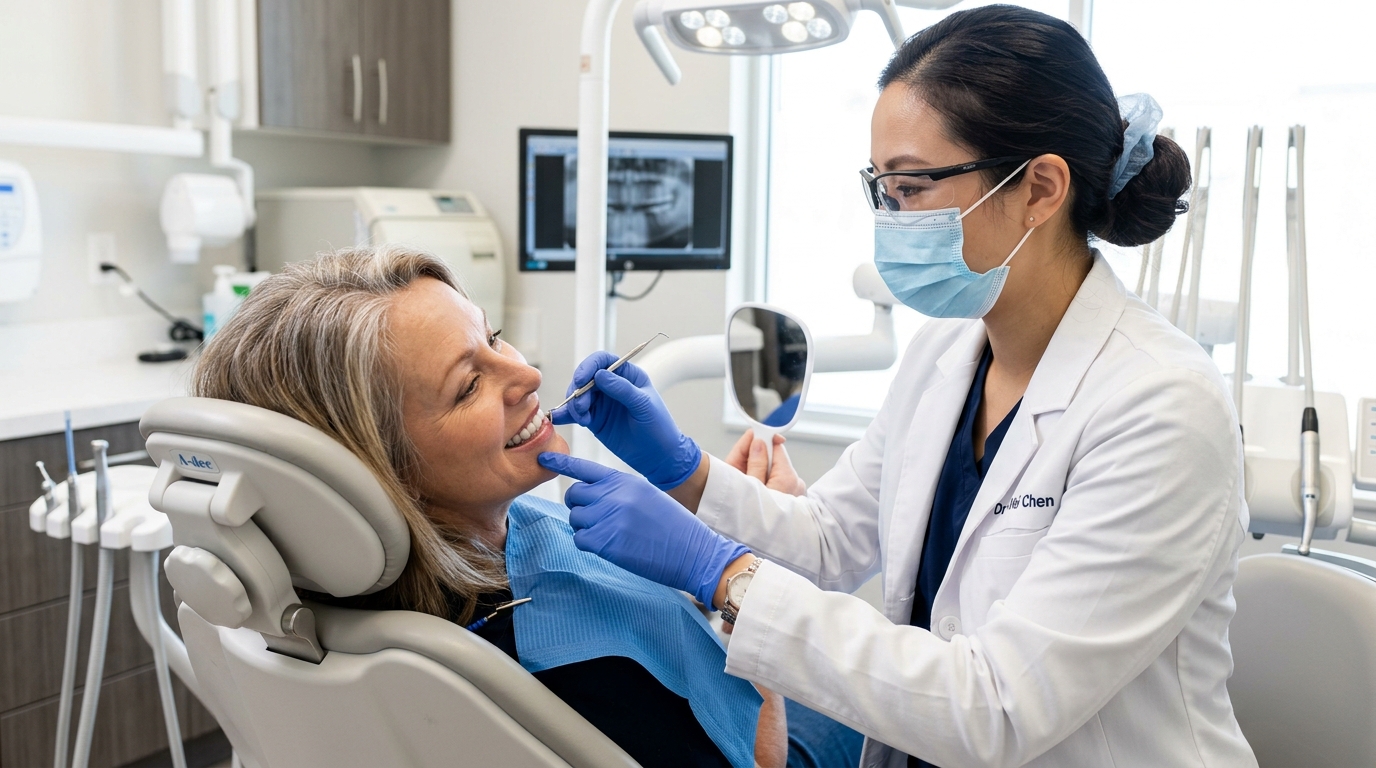
In contrast, permanent pulp damage exhibits severe, throbbing pain that wakes you up at night or persists for several minutes after hot food contact. This rare complication occurs if a tooth experienced deep trauma or decay prior to veneer placement. To explore our diagnostic environment, check out our clinical 3D walkthrough.
Why Does Incorrect Bite Occlusion Cause Prolonged Sensitivity?
Premature bite contact forces excessive chewing pressure onto individual veneers, inflaming the periodontal ligament and causing persistent soreness when biting down.
If post-treatment sensitivity persists beyond two weeks or hurts specifically during chewing, the primary cause is almost always occlusal high spots (premature contact points). Even a micro-discrepancy of 0.05mm in bite height can cause the opposite teeth to strike a new veneer earlier than surrounding teeth.
When high spots exist, the intense mechanical pressure transfers through the ceramic into the root ligament, triggering localized ligament inflammation. Patients often mistake this ligament trauma for pulp pain. Occlusal bite registration using articulating paper identifies heavy contacts in both centric occlusion and dynamic lateral excursions, allowing the dentist to re-establish harmonious canine guidance and eliminate premature interference. Proper equilibration ensures that all teeth participate equally in the occlusion cycle. When chewing forces are balanced across the entire arch, stress concentration on individual porcelain shells is minimized, promoting long-term joint health and preventing ligament inflammation. Correcting high spots requires a simple 2-minute bite equilibration in the clinic. To learn how we analyze 4D bite movement, see our guide on modjaw 3d bite tracking smile design.
| Sensitivity Category | Typical Symptoms | Duration & Resolution |
|---|---|---|
| Transient Post-Op Thermal | Brief zing to cold ice water or hot drinks. | Resolves naturally in 3 to 14 days. |
| Occlusal High Spot Trauma | Soreness or sharp discomfort when biting down. | Requires quick clinical bite adjustment. |
| Micro-leakage Margin Gap | Sensitivity to sweet foods or localized gum ache. | Requires margin sealing or re-bonding. |
| Irreversible Pulpitis | Severe lingering pain, spontaneous night throbbing. | Requires endodontic root canal therapy. |
Which Clinical Solutions Relieve Sensitivity From Margins and Bonding?
In-office desensitizing varnish application, resin margin sealing, and occlusal polishing provide instant relief for post-treatment nerve sensitivity.
If you experience post-operative thermal discomfort, clinical relief is readily available. At Dental NKT, we apply specialized in-office desensitizing varnishes containing potassium nitrate and sodium fluoride. Desensitizing varnishes containing fluoride and calcium phosphate help remineralize exposed enamel margins, sealing microscopic dentinal tubules and restoring thermal comfort quickly. Routine maintenance with desensitizing agents helps maintain a strong protective seal around the cervical margins. Applying a micro-thin layer of resin sealant protects exposed dentin and keeps the restoration border smooth and comfortable. These agents penetrate the dentinal tubules, blocking nerve impulse transmission and providing immediate comfort.
Additionally, improper resin curing or micro-gaps along the margin can cause bonding resin tooth sensitivity. Performing a precise margins adjustment sensitivity check allows our dentists to flow low-viscosity resin sealant over any unsealed micro-seams. To review treatment pricing, visit our treatment costs index. You can also read about our long-term warranty policies on our global warranty terms page.
According to clinical studies indexed on PubMed, desensitizing agents containing GLUMA (glutaraldehyde and HEMA) reduce post-prep dentin hypersensitivity by over 90%. Our clinical team applies GLUMA prior to permanent resin cementation as a standard preventive protocol. To explore diagnostic technology used during your treatment, visit our advanced technology and equipment page. To learn more or to ask clinical questions, please contact our patient team directly.
Experiencing post-treatment tooth sensitivity after getting veneers? Chat directly with Dr. Nguyen Thu Hoai on WhatsApp to receive personalized clinical desensitizing advice.
Consult Dr. Hoai on WhatsAppFAQ: What Are the Key Questions About Tooth Sensitivity After Veneers?
Q1: How long does tooth sensitivity last after getting veneers?
Transient thermal sensitivity usually peaks within 48 hours and gradually resolves over 1 to 2 weeks as the nerve adapts. If sensitivity lasts longer than two weeks, a quick bite check is recommended.
Q2: Can I use desensitizing toothpaste on porcelain veneers?
Yes. Using a non-abrasive desensitizing toothpaste containing potassium nitrate for two weeks after placement helps soothe nerve endings without scratching the ceramic surface glaze.
Q3: Should I avoid cold or hot foods after receiving new veneers?
It is recommended to avoid extreme temperatures (ice water or piping hot soup) for the first 3 to 5 days after cementation to allow the tooth nerve fibers to stabilize in a comfortable environment.