How Do Traditional Crowns and Ultra-Thin Emax Veneers (0.3mm) Compare?
Unlike traditional dental crowns that require removing up to sixty percent of the tooth structure, modern ultra-thin veneers require minimal preparation of only zero point three millimeters.
For international patients seeking a dramatic smile transformation, the fear of losing healthy tooth structure is a common barrier. When researching cosmetic dentistry options, understanding the exact parameters of minimal prep veneers tooth shaved helps you make an informed decision about your dental care. In the past, achieving a bright, aligned smile often required grinding down healthy teeth to small pegs to fit traditional porcelain crowns. Today, advanced ceramic materials allow cosmetic dentists to preserve the integrity of your natural teeth while delivering stunning aesthetic results.
During the clinical evaluation, the team at Dental NKT assesses the alignment and health of your teeth to determine the least invasive approach. By using premium lithium disilicate ceramics like IPS emax, we can create restorations that are incredibly thin yet durable. These ultra-thin shells are bonded directly to the front surface of the teeth, requiring very little modification. To understand the differences between various aesthetic options, check out our porcelain veneers services page. You can also explore our general dental implant services to compare reconstructive pathways.
This conservative preparation process is key to preventing long-term tooth sensitivity. Traditional crowns involve removing the protective enamel layer and exposing the sensitive dentin underneath, which can lead to permanent nerve irritation. By restricting the preparation to the outer enamel, our clinical specialists ensure that the teeth remain strong, healthy, and completely pain-free. To review the qualifications of our cosmetic dentists, visit our dentists and clinical specialists page.
| Restoration Type | Typical Shaving Depth | Enamel Preservation Rate |
|---|---|---|
| Traditional Full Crowns | 1.5mm to 2.0mm (all sides of the tooth). | Very low (under 10 percent preserved). |
| Traditional Veneers | 0.5mm to 0.7mm (front surface only). | Moderate (50 to 70 percent preserved). |
| Ultra-Thin Emax Veneers | 0.3mm to 0.4mm (micro-abrasion only). | High (90 to 95 percent preserved). |
| No-Prep Veneers | 0.0mm (no mechanical preparation). | Maximum (100 percent fully preserved). |
Interactive Smile Makeover: How Does the Before & After Veneers Comparison Look?
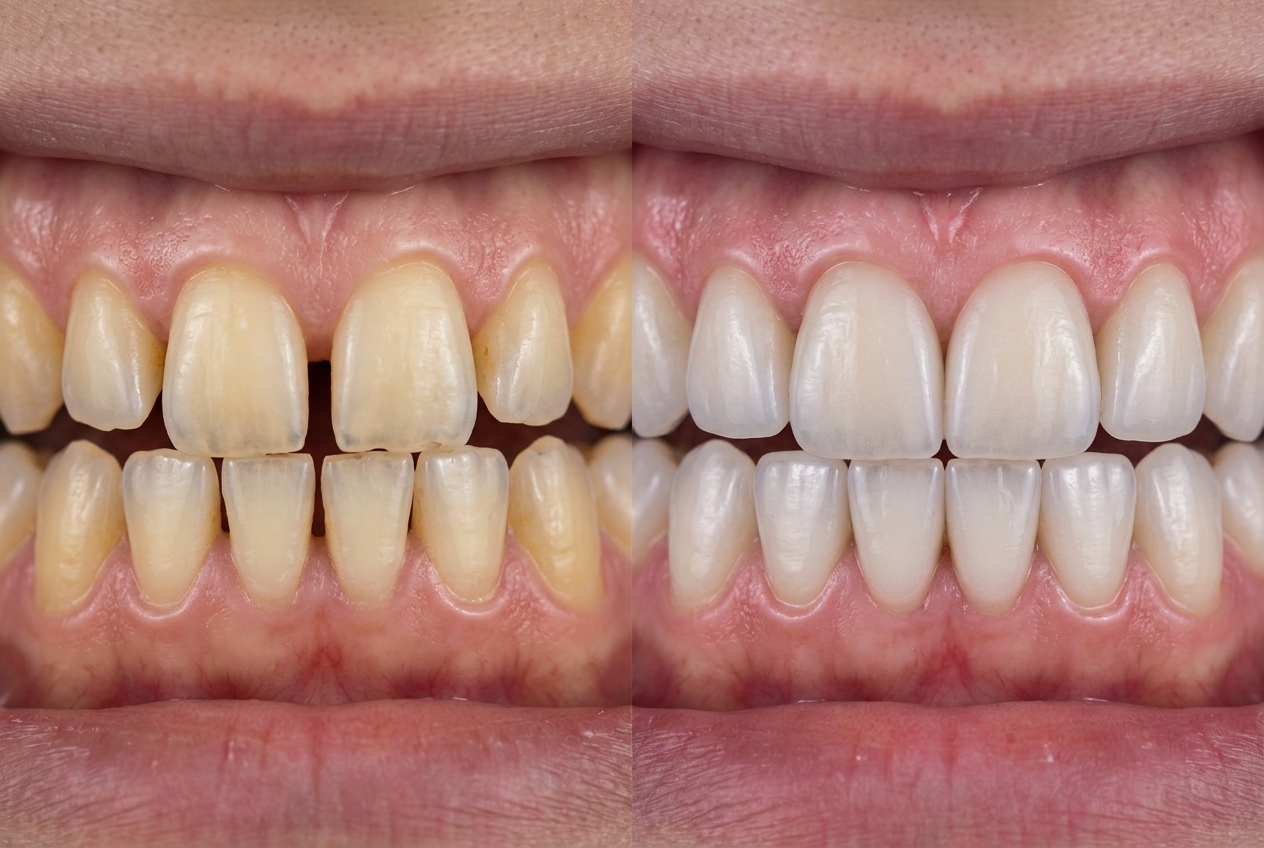
Use the interactive slider below to compare the appearance of natural teeth with gaps and discoloration against the final result achieved with ultra-thin porcelain veneers at Dental NKT.
Why Is the Biological Preservation of Tooth Enamel Critical?
Enamel is the strongest substance in the human body, and preserving this natural barrier is essential for achieving a durable, long-term bond.
Maintaining a strong focus on tooth enamel preservation is not just about aesthetics; it is a fundamental rule of dental bonding. The outer layer of the tooth is composed of crystalline enamel prisms, which provide an ideal surface for adhesive resin cements. When we bond porcelain to enamel, the resulting bond strength is exceptionally high, virtually fusing the restoration to the tooth. In contrast, if the enamel is completely removed to expose the dentin, the bonding strength drops significantly, increasing the risk of the veneer debonding over time.
Furthermore, enamel does not contain nerve endings, which means the preparation process is completely comfortable. During an emax thin veneers prep, the dentist only removes a micro-layer of enamel, often making local anesthesia unnecessary. This conservative approach keeps the underlying tooth structure completely healthy, protecting it from decay and maintaining its natural vitality. To compare treatment options and check fees, visit our dental implant cost comparison page. We also details our diagnostic facilities on our advanced technology and equipment page.
Preserving natural enamel also ensures that the tooth retains its natural flexibility and structural strength. When a tooth is heavily ground down, it becomes more brittle and prone to fracturing under normal chewing forces. By keeping the preparation minimal, we ensure that the teeth can comfortably withstand daily function. To read more about dental restorations, check our dental handbook articles.
Is the Tooth Preparation for Veneers Reversible?
Because a small layer of enamel is permanently removed during the preparation phase, veneers must be considered a non-reversible treatment.
A common question among dental tourists is whether they can choose to remove their veneers and return to their natural teeth in the future. Because even a minimal preparation removes a small amount of enamel, the process is permanent. Once your teeth are prepared, they will always require some form of coverage (such as a veneer or crown) to protect the exposed surface.
However, for candidates who meet the necessary criteria, no prep veneers safety offers a fully reversible alternative. No-prep veneers do not require any drilling or enamel removal. The ultra-thin porcelain is bonded directly over the unmodified teeth. While this method is highly appealing, it is only suitable for patients with small, spaced, or slightly recessed teeth, as placing veneers over normally aligned teeth without prep can make them look bulky. Our lead clinicians use advanced digital smile design software to show you exactly how each option will look before any treatment begins. To learn more about our aesthetic planning, visit our clinical 3D walkthrough. We also provide warranties on our restorations, which you can review on our global warranty terms page.
Want to know if your teeth are suitable for no-prep or minimal-prep veneers? Contact our clinical coordinators to submit your photos for a free review.
Contact Our Cosmetic SpecialistsWhat Are the Longevity Expectations for Minimal Prep Restorations?
With proper oral hygiene and regular professional cleanings, premium lithium disilicate veneers can easily last fifteen years or longer.
Long-term clinical trials confirm that ultra-thin porcelain veneers are exceptionally durable. Because the restoration is bonded entirely to the natural enamel, the seal is highly resistant to bacterial leakage and staining. The smooth glazed surface of the ceramic also resists plaque accumulation, making it easier to maintain healthy gums around the margins.
To maximize the lifespan of your smile makeover, patients should wear a protective nightguard if they grind their teeth at night and avoid biting directly into extremely hard foods. Maintaining regular cleanings at your local clinic is essential to keep the supporting structures healthy. If you have any concerns or need a personal assessment, please contact our clinical team to get a prompt evaluation from Dr. Nguyen Huy Hoang at Dental NKT today.
FAQ: What Are the Common Questions About Veneer Shaving Depth?
Q1: Does mài răng for minimal prep veneers cause permanent pain?
No, because the preparation is restricted to the outer enamel layer where there are no nerve endings, patients experience no pain. Temporary mild sensitivity during the first few days is normal and resolves quickly.
Q2: What is the difference between ultra-thin veneers and crowns?
Veneers are thin shells covering only the front of the tooth, preserving most of the natural structure. Crowns are cap-like restorations covering the entire tooth, requiring significant reduction of all sides.
Q3: Can prepared teeth decay under the porcelain veneers?
Decay is only possible if the margins are not properly sealed or if hygiene is neglected. When placed by a qualified dentist using premium adhesive resin cements, the bond is completely hermetic, protecting the underlying tooth.