How Do Durability and Stain Resistance Compare?
While composite resin offers a fast and conservative fix for minor tooth flaws, premium glass-ceramic veneers deliver vastly superior stain resistance and structural durability over the long term.
For international patients planning a smile transformation abroad, choosing between composite resin and porcelain ceramic is a major decision. When evaluating these options, analyzing the parameters of composite bonding vs porcelain veneers durability helps you choose the treatment that matches your budget and lifestyle. Both methods can correct gaps, chips, and discoloration, but they perform very differently under daily chewing forces and exposure to dark pigments in food and drinks.
During the clinical evaluation, the team at Dental NKT assesses the alignment and health of your teeth to determine the least invasive approach. By using premium lithium disilicate ceramics like IPS emax, we can create restorations that are incredibly thin yet durable. These ultra-thin shells are bonded directly to the front surface of the teeth, requiring very little modification. To understand the differences between various aesthetic options, check out our porcelain veneers services page. You can also explore our cosmetic smile makeover services to compare aesthetic pathways.
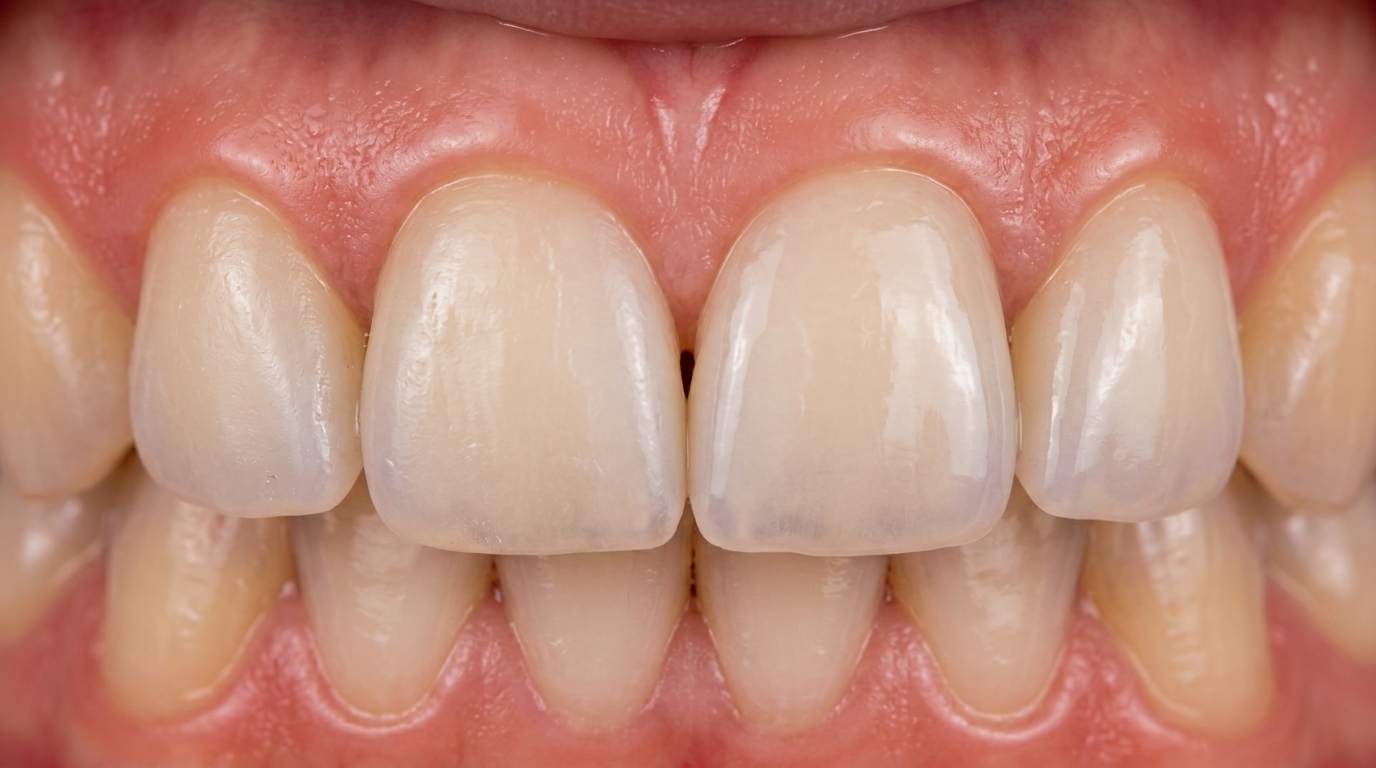
Composite resin is a blend of plastic monomers and glass fillers that is applied directly to the teeth and hardened with a curing light. Because resin is a porous material, it tends to absorb microscopic food pigments over time, leading to gradual yellowing or darkening. Porcelain, on the other hand, is a non-porous glass-ceramic that is baked in a high-temperature kiln. The glazed outer surface of porcelain veneers provides excellent stain resistance veneers, ensuring that your smile remains bright and white even if you regularly drink coffee, tea, or red wine.
From a materials science perspective, the difference in stain resistance veneers is rooted in the chemical structure of the restorations. Composite resin is a polymer-based matrix filled with silica particles. Over time, exposure to dietary acids, citrus fruits, and colored beverages causes the organic matrix to undergo micro-hydrolysis. This process creates microscopic fissures and surface roughness that act as traps for color pigments. In contrast, IPS emax lithium disilicate is a glass-ceramic material that is highly dense and chemically inert. It does not react with acids or absorb organic dyes, meaning the polished surface remains completely smooth and reflective. As a result, porcelain restorations keep their shade indefinitely, while composite restorations require periodic polishing to remove stain accumulation from the outer surface.
| Restoration Feature | Direct Composite Bonding | IPS Emax Porcelain Veneers |
|---|---|---|
| Average Lifespan | 3 to 5 years (requires regular polishing). | 10 to 15 years (highly durable). |
| Stain Resistance | Moderate (porous resin absorbs pigments). | Excellent (glazed ceramic resists staining). |
| Preparation Required | None to minimal (addition-only bonding). | 0.3mm micro-prep (limited to enamel). |
| Repairability | High (can be repaired directly in chair). | Low (requires complete replacement if chipped). |
What Are the Tooth Preparation Levels for Bonding vs Porcelain?
While composite bonding does not require shaving down healthy enamel, premium porcelain veneers require a micro-preparation of only 0.3mm to prevent a bulky look.
The amount of modification required for your natural teeth is a key factor when comparing these treatments. Direct composite bonding is highly conservative because the dentist applies the material directly onto the natural enamel. This means the procedure is completely reversible, as the natural tooth underneath remains fully intact. For minor adjustments like closing a small gap or repairing a small chip, composite resin is often the least invasive pathway.
To understand the details of enamel shaving depths, you can read our guide on minimal prep veneers tooth shaved. We also details our diagnostic facilities on our advanced technology and equipment page. To explore other articles, visit our dental handbook articles directory.
Another technical aspect is the fabrication process of these two materials. Direct composite bonding is layered by hand in the patient's mouth by the dentist, requiring exceptional detail and precision. Because it is built up in increments, there is a risk of micro-voids forming between the composite layers, which can act as structural weak points. Porcelain veneers, however, are fabricated using advanced CAD/CAM milling or heat-pressing under extreme pressure in a laboratory. This industrial fabrication process ensures that the ceramic has zero internal voids, resulting in a highly uniform crystal structure that can distribute chewing forces evenly. This structural integrity is why porcelain veneers rarely fracture compared to direct resin bonding.
In contrast, porcelain veneers require a tiny amount of preparation to accommodate the thickness of the ceramic shell. By shaving approximately 0.3mm of the front enamel, the dentist creates a smooth landing area for the veneer, ensuring it sits flush with your surrounding teeth. Without this micro-prep, the added thickness of the porcelain would make your teeth look unnaturally thick and bulky. Because this preparation permanently removes a micro-layer of enamel, porcelain veneers are a non-reversible treatment.
What Is the Total Cost Analysis Over a 10-Year Period?
Although composite resin has a lower initial cost, the long-term cost of ownership over a 10-year period is often higher due to frequent replacements and polishing sessions.
When analyzing the cost of cosmetic dentistry, patients should evaluate the total cost of ownership rather than just the initial price tag. The initial emax press veneers price is higher than composite bonding because it involves laboratory fabrication and high-strength materials. However, because the average tooth bonding longevity is only 3 to 5 years, composite bonding usually requires replacement at least twice over a 10-year period. In addition, composite resin requires regular professional polishing to maintain its gloss and remove surface staining.
Beyond the financial expenses, patients should also consider the biological cost of repeated treatments. Every time a composite bonding restoration chips or discolors, the dentist must remove the old material and etch the tooth again to apply fresh resin. Even with conservative techniques, this repetitive process can cause minor cumulative wear on the underlying enamel over a 10-year period. In contrast, a durable porcelain veneer acts as a protective shield over the front surface of the tooth, requiring no intervention for a decade or more. By choosing a long-lasting material from the start, you minimize the frequency of dental appointments and preserve your natural tooth structure from repetitive modifications.
Porcelain veneers are highly durable and resistant to wear, meaning they can easily last 10 to 15 years with basic care. When you factor in the cost of replacing composite resin multiple times, along with the maintenance fees, porcelain veneers often emerge as the more cost-effective option over the long term. At Dental NKT, we offer comprehensive warranties on our restorations, which you can review on our global warranty terms page. To view a 3D simulation of your planned restorations, check our clinical 3D walkthrough.
For international patients traveling to Hanoi, our patient coordinators can help you coordinate flights, airport pickup, and clinic visits. To get in touch, please contact our clinical coordinators directly to obtain a personalized quote.
Want a complete breakdown of costs, durability, and discoloration rates for your specific case? Contact our clinical team to receive a free digital smile assessment.
Get Free Smile AssessmentFAQ: What Are the Key Questions About Composite and Porcelain Restorations?
Q1: Which material looks more natural under direct light?
Porcelain offers a much more natural appearance. Ceramic replicates the light-reflecting properties and translucency of natural enamel, whereas composite resin tends to have a more opaque, matte finish.
Q2: Can I get composite bonding first and upgrade to porcelain veneers later?
Yes, this is a common pathway. Because composite bonding is non-invasive and preserves the natural tooth structure, the resin can be polished off in the future to prepare the teeth for porcelain veneers.
Q3: How should I care for my restorations to maximize their durability?
For both materials, maintain excellent oral hygiene by brushing with a soft-bristled toothbrush and flossing daily. Avoid using abrasive charcoal toothpastes, and wear a nightguard if you tend to grind your teeth at night.