Which Toothpastes and Flossing Routines Work Best for Ceramics?
Maintaining pristine porcelain veneers requires a gentle home care regimen centered on non-abrasive toothpastes and daily interdental flossing to preserve surface glaze and gingival health.
For patients who have completed a cosmetic smile makeover, knowing how to care for porcelain veneers properly is the single most important factor in maximizing restoration longevity. While high-grade IPS e.max lithium disilicate glass-ceramics are impervious to natural dental decay, the underlying natural tooth structure and surrounding gum tissue remain susceptible to plaque accumulation and periodontal inflammation.
During post-treatment consultations at Dental NKT, Dr. Nguyen Thu Hoai emphasizes selecting dental products that protect both the ceramic glaze and the adhesive resin bond. Patients should exclusively use a non abrasive toothpaste veneers formulated with gel consistency and a low Relative Dentin Abrasivity (RDA) rating under 70. The chemical formulation of toothpastes plays a vital role in protecting your cosmetic restorations. Many commercial toothpaste brands include silica particles designed to scrub surface stains off natural enamel. However, when applied to micro-polished lithium disilicate, these abrasive particles create microscopic scratches that alter the light reflection of your veneers, leading to loss of surface luster over time. To review our team credentials, visit our dentists and specialists page.
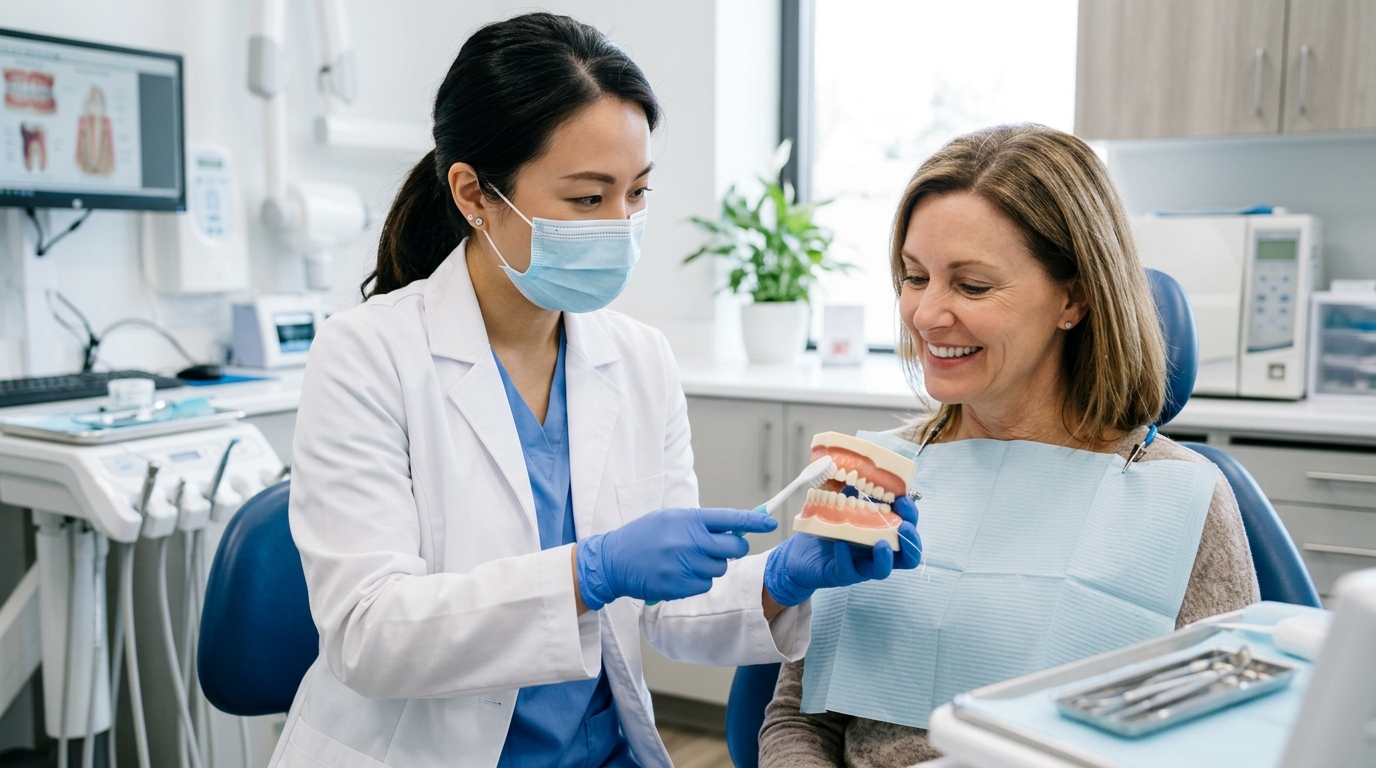
Establishing a daily veneer flossing routine is equally crucial. Plaque buildup along the cervical margin (where the ceramic meets the natural enamel) can lead to marginal gingivitis or recession, exposing the seam of the restoration. Using soft unwaxed floss or an oral irrigator water flosser daily removes food debris without dislodging the margins. To explore our clinic diagnostic environment, check out our clinical 3D walkthrough.
Why Are Custom Nightguards Essential to Prevent Bruxism Damage?
Unconscious night-time teeth grinding exerts extreme shear forces that can chip ceramic edges, making custom bruxism nightguards a vital protective investment.
Nocturnal bruxism (involuntary clenching or grinding during sleep) is one of the leading causes of ceramic chipping and debonding. Chewing forces during daytime eating typically range between 20 and 80 pounds of pressure per square inch. However, during deep sleep, bruxism episodes can generate forces exceeding 250 pounds directly onto front restorations.
To protect your cosmetic investment, wearing a custom-fitted nightguard for bruxism veneers made from soft-hard thermoformed acrylic is strongly advised. Proper bite assessment is a prerequisite before fabricating a nocturnal appliance. Your clinician takes digital impressions to construct an upper nightguard that balances contact points across all teeth, minimizing lateral strain on individual ceramic shells. The nightguard acts as a shock-absorbing buffer, distributing bite pressure evenly across the dental arch and preventing direct ceramic-to-ceramic friction. To understand how ultra-thin ceramics bond to enamel, see our guide on are no prep veneers durable.
| Hygiene Parameter | Recommended Practice | Products to Avoid |
|---|---|---|
| Toothbrushing | Soft-bristled brush, non-abrasive fluoride gel (RDA < 70). | Hard or medium bristles, charcoal or whitening pastes. |
| Interdental Care | Daily unwaxed floss or water flosser at medium pressure. | Wooden toothpicks or metal interdental picks. |
| Bruxism Protection | Custom thermoformed acrylic nightguard worn every night. | Over-the-counter boil-and-bite soft guards (unstable fit). |
| Professional Maintenance | Biannual scaling using fine ultrasonic tips and polishing pastes. | Coarse prophy pastes or harsh acidulated fluoride rinses. |
When Should You Schedule Periodic Clinical Scale and Clean Visits?
Biannual clinical hygiene appointments allow dentists to inspect ceramic margin integrity, polish surface glaze, and perform gentle scaling.
In addition to home hygiene routines, scheduling professional maintenance every six months is vital for long-term restoration health. During a professional hygiene visit, your clinician uses specialized fine ultrasonic scalers and non-abrasive polishing pastes designed specifically for ceramic restorations. Ultrasonic scaling must be performed with specialized non-metallic or plastic-tipped inserts around ceramic margins to avoid scratching the polished restoration border.
According to clinical studies indexed on PubMed, regular professional hygiene appointments reduce the risk of peri-implant and peri-veneer margin inflammation by over 85%. Hygienists inspect the margins under magnification to confirm that the resin bond line remains completely sealed. To review treatment pricing and maintenance costs, visit our treatment costs index. You can also explore diagnostic details on our advanced technology and equipment page.
For international patients who have returned to Australia after receiving treatment in Hanoi, our clinical board provides continuous remote support. You can upload high-resolution photographs or local X-rays to our patient portal annually for a remote checkup. To learn more or to ask clinical questions, please contact our patient team directly.
Would you like to receive our downloadable clinical home maintenance guide for porcelain veneers? Chat with our patient coordinators on WhatsApp to request your free PDF guide.
Download Hygiene Guide on WhatsAppFAQ: What Are the Key Questions About How to Care for Porcelain Veneers?
Q1: Can I use an electric toothbrush on porcelain veneers?
Yes. Electric toothbrushes with soft-bristled heads and pressure sensors are safe and effective for porcelain veneers, helping remove plaque without scratching the ceramic surface glaze.
Q2: Will coffee, tea, or red wine stain my porcelain veneers?
High-grade lithium disilicate glass-ceramics are non-porous and highly resistant to stains. However, heavy staining liquids can discolor the natural teeth adjacent to the veneers or the resin cement seams over time, so rinsing with water after drinking is recommended.
Q3: What should I do if a veneer feels slightly rough along the edge?
If an edge feels rough, avoid picking at it. Contact your dentist to perform a quick micro-polishing session with fine ceramic finishing burs to smooth the margin and protect the resin seal.