Patients considering ultra-thin ceramic restorations often marvel at how a delicate 0.3mm shell of porcelain withstands heavy daily chewing forces without dislodging. When evaluating long-term retention, understanding porcelain veneers bonding strength resin cement mechanisms, microscopic surface etching protocols, and enamel adhesion rules provides confidence in modern cosmetic dentistry. For zero-prep candidacy details, review our no prep vs traditional veneers comparison guide.
Biomimetic restorative studies led by Pascal Magne et al. published on PubMed confirm that light-cured resin cement creates a dual-phase chemical and micro-mechanical union between lithium disilicate porcelain and natural tooth enamel. At Dental NKT, Doctor Nguyen Thi Thuy Hang utilizes Swiss-milled Ivoclar Emax glass-ceramics, hydrofluoric acid surface conditioning, and silane coupling agents under strict rubber dam moisture isolation. Explore our specialized porcelain veneers service guide page for all aesthetic options.
In this clinical guide, Doctor Nguyen Thi Thuy Hang, Head of Cosmetic Dentistry at Dental NKT, details hydrofluoric acid etching, silane chemical reactions, enamel versus dentin bond strength comparisons, and transparent treatment costs for international patients in Hanoi. Check our Dental NKT International Pricing Directory for all-inclusive treatment fees.
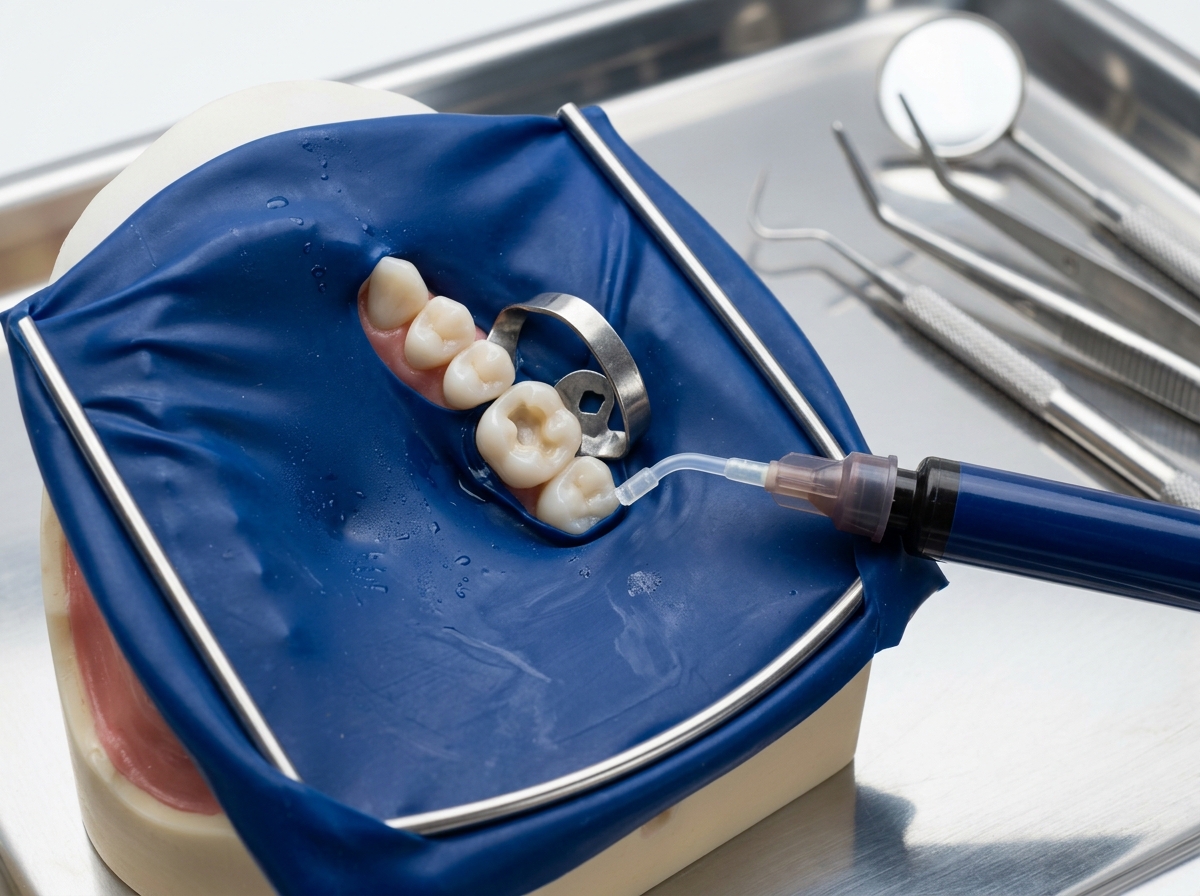
What Is the Science of Hydrofluoric Acid Etching and Silane Coupling Reactions?
Featured Snippet Summary: Etching Emax ceramic with 5 to 9 percent hydrofluoric acid creates microscopic retentive pores, while silane coupling agents form chemical siloxane bonds that bridge inorganic porcelain with organic resin cement.
The exceptional retention of modern porcelain laminates relies on a two-step surface preparation sequence that transforms smooth ceramic glass into a highly reactive bonding substrate:
How Do Chemical Agents Prepare Porcelain Surfaces for Bonding?
Prosthodontic researchers outline the dual-bonding mechanism:
- Hydrofluoric Acid Micro-Etching (HF 5-9%): Selectively dissolves the glass matrix of lithium disilicate ceramic, creating a honeycomb-like microporous surface pattern for resin interlocking.
- Silane Coupling Agent Application: Organosilane molecules feature bifunctional ends; one end forms strong covalent siloxane bonds (Si-O-Si) with porcelain glass, while the other co-polymerizes with methacrylate resin cement.
- Strict Rubber Dam Moisture Isolation: Preventing salivary or blood contamination during acid etching and resin application is vital; employing rubber dam isolation guarantees a pristine, dry enamel field required to achieve maximum 30 to 40 MPa adhesion.
- Light-Cured Resin Cement Interlocking: Low-viscosity resin flows deep into microscopic ceramic pores, hardening under blue curing light (470nm wavelength) into a structural solid. Read about material durability in our emax veneers vs composite bonding durability guide.
How Does Enamel Bonding Compare to Dentin Bonding Strength?
Adhesion Benchmark: Etched natural tooth enamel achieves 30 to 40 MPa shear bond strength with resin cement under dry rubber dam conditions, matching natural tooth structural integrity.
The long-term success of porcelain veneer adhesion depends significantly on the underlying tooth tissue substrate:
Why Is Enamel the Ideal Substrate for Porcelain Veneers?
- High Mineral Enamel Adhesion (30-40 MPa): Phosphoric acid etching (37%) creates micro-tags in enamel hydroxyapatite prisms. Resin cement penetrates these tags, forming an adhesive bond nearly identical to natural tooth strength.
- Moist Dentin Substrate (15-25 MPa): Dentin contains collagen tubules and fluid movement, resulting in lower adhesive values. Preserving outer enamel substrate maximizes long-term restoration stability. Read about shade selection in our how to choose natural veneer tooth shade guide.
- Margins Protection Against Micro-Leakage: Enamel-bonded margins resist bacterial infiltration and marginal discoloration over many years. Learn about periodontal safety in our do veneers cause bad breath or gum damage guide.
What Is the Informed Consent Notice Regarding Enamel Substrate Retention?
Ethical Biomimetic Disclosure: Enamel Retention Requirement. Maintaining at least 50 to 70 percent of the natural tooth enamel substrate is essential for optimal long-term bond strength. If extensive prior tooth wear exposes underlying dentin, additional restorative planning may be recommended.
Why Do Emax Press Veneers Become an Integrated Part of Your Natural Tooth?
Integrated Monolithic Unit: Once bonded with resin cement, thin 0.3mm Emax disilicate ceramic redistributes masticatory stresses evenly across natural tooth structures.
Unbonded porcelain is brittle, but once fused to tooth enamel via biomimetic resin cement, the restoration becomes an integrated structural component:
How Does Biomimetic Bonding Restore Tooth Stiffness?
- Stress Distribution & Load Transfer: Occlusal forces are transmitted through the elastic modulus of the resin cement layer directly into tooth enamel, mimicking natural biomechanics.
- Thermal Expansion Compatibility: Emax glass-ceramic (400-500 MPa flexural strength) shares a thermal expansion coefficient similar to natural enamel, preventing micro-fractures under temperature changes.
- Long-Term Restoration Stability: Long-term clinical follow-up studies published in the International Journal of Prosthodontics report a 95 to 98 percent survival rate over 10 to 15 years when veneers are bonded to sound enamel substrates under strict moisture isolation. Explore complete smile makeovers in our smile makeover services guide.
How Do Resin Cement Bonded Veneer Costs Compare Between Australia and Vietnam?
High-strength resin cement bonded Emax disilicate veneers cost $520 to $650 AUD per tooth at Dental NKT, compared to $1,200 - $2,500 AUD per tooth in Australia.
Note: Australian fee estimates are based on published Australian Dental Association (ADA) average fee survey benchmarks for cosmetic porcelain veneers (ADA item 582 & 583). Dental NKT fees reflect all-inclusive clinical service pricing in Hanoi.
| Porcelain Bonding Procedure | Adhesion Features & Chemical Conditioning | Cost in Australia (AUD) | Dental NKT Price (AUD) |
|---|---|---|---|
| Emax CAD Resin Bonded Veneer (Per Tooth) | HF acid etching, silane coupling, light-cured resin cement | $1,200 - $1,800 AUD | $520 AUD (Save 65 percent) |
| Master Hand-Layered Biomimetic Package | High-enamel retention prep, master ceramist hand-layered incisal | $1,800 - $2,500 AUD | $650 AUD (Save 70 percent) |
| Full Smile Biomimetic Makeover (8 Teeth) | Full arch enamel bonding, 3D Digital Smile Design, 10-year warranty | $12,000 - $18,000 AUD | $4,160 AUD (Save 70 percent) |
Details: Hydrofluoric Etching + Silane + Resin Cement
Sydney Price: $1,200 - $1,800 AUD
Details: High-Enamel Retention Prep + Master Layering
Sydney Price: $1,800 - $2,500 AUD
Details: 8 Emax Disilicate Veneers + 3D Smile Makeover
Sydney Price: $12,000 - $18,000 AUD
Why Choose Hanoi and Dental NKT for Biomimetic Porcelain Veneer Bonding?
International patients traveling to Hanoi receive full travel concierge assistance, 3D Digital Smile Design simulations, and 10-year global warranty passports.
Choosing Dental NKT in Hanoi allows international travelers to receive high-strength biomimetic Emax disilicate veneers in 5 days while saving up to 70 percent compared to Australian private clinic fees. Read about full-coverage emax porcelain crowns or explore our dentists and clinical team profile page. Review our global warranty terms for complete details.
- Digital Smile Design (DSD): Preview your customized smile simulation on 3D software prior to tooth preparation.
- 10-Year Global Warranty: Backed by official Emax manufacturer certificates for international maintenance support.
- Transparent Billing: Zero hidden fees, covering 3D scans, mock-up try-ins, temporary veneers, final Emax disilicate bonding, and private airport transfers. Feel free to contact our clinical team to schedule your evaluation.
Clinical Care Notice: Biomimetic Bonding Assessment
Schedule Your Veneer Bonding Consultation
Receive a free 3D Digital Smile Design evaluation and biomimetic bonding review prior to traveling to Hanoi.
Schedule a Pre-Travel Clinical ReviewFAQ: How Strong Is Resin Cement Bonding for Porcelain Veneers?
Q1: How strong is resin cement bonding for porcelain veneers?
When bonded to etched natural enamel under strict rubber dam isolation, resin cement achieves 30 to 40 MPa shear bond strength, effectively integrating the thin ceramic veneer into natural tooth architecture.
Q2: Can porcelain veneers pop off while eating hard food?
Detachment is rare when veneers are bonded to sound enamel. Patients should still avoid biting non-food objects or extremely hard items like ice or bones to protect restorations.
Q3: What happens if a porcelain veneer comes loose?
If a veneer dislodges intact, keep the restoration dry and clean and visit your dentist promptly for professional re-bonding assessment.