What Are the Indications for Structural Loss vs Cosmetic Correction?
Choosing between a veneer and a crown depends on the level of structural damage. Veneers preserve enamel for aesthetic enhancements, whereas crowns protect compromised teeth from fracture.
When planning a smile makeover, international patients often wonder whether they should choose veneers or crowns. Both options serve vital roles in modern restorative care, but they are designed for completely different clinical situations. Evaluating the differences between veneers vs crowns for cosmetic dentistry is crucial to making an informed decision that balances aesthetic goals with long-term oral health.
During your initial consultation, Dr. Nguyen Thi Thuy Hang evaluates the physical condition of your teeth to identify the correct restoration path. Veneer indications typically focus on minor cosmetic defects. These include chipped edges, mild alignment issues (often researched as veneer indications crooked teeth), and stubborn internal staining that cannot be resolved with bleaching. In contrast, crowns are indicated when there is significant structural loss due to deep decay, large metal fillings, or root canal therapy. To review the credentials of our clinical team, visit our dentists and specialists page.
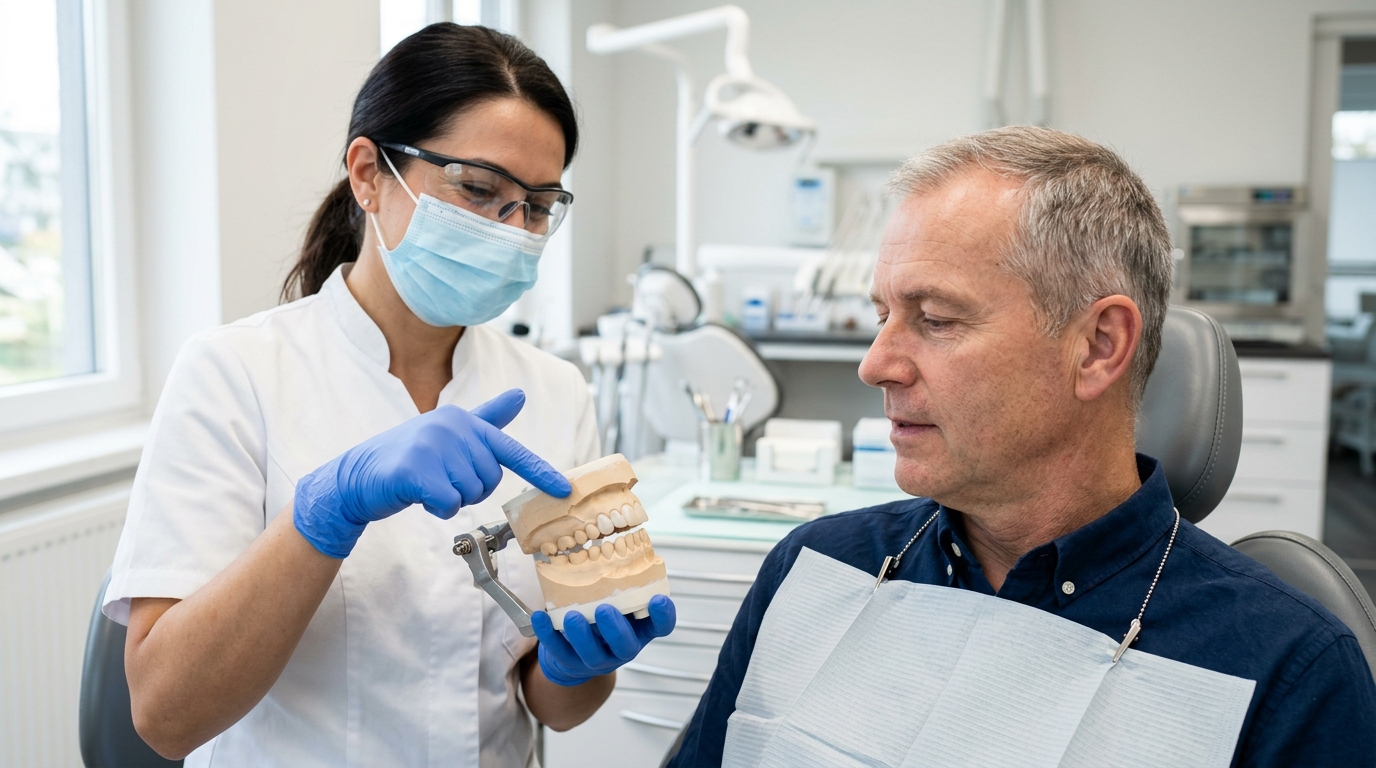
For patients seeking high-quality porcelain restorations hanoi, selecting the correct restoration prevents premature failure. A veneer is a thin shell of lithium disilicate or feldspathic porcelain bonded to the front surface of the tooth, acting like a protective enamel shield. A crown, however, is a complete cap that covers the entire visible portion of the tooth down to the gumline. To check our clinic diagnostic equipment and facility details, visit our advanced technology and equipment page. You can also explore our 3D tour in our clinical 3D walkthrough.
How Do Preparation Depth and Enamel Preservation Compare?
The primary mechanical difference lies in the volume of tooth structure removed. Veneers are minimally invasive, whereas crowns require circumferential reduction to accommodate the thicker ceramic walls.
The most important factor to consider when comparing veneers vs crowns for cosmetic dentistry is the preservation of your natural tooth structure. Enamel is irreplaceable, and conserving as much of it as possible is a core principle of modern cosmetic dentistry. The preparation techniques for these two restorations differ significantly in depth and scope, which directly impacts the long-term health of your tooth pulp.
For a standard veneer, the preparation is limited to the facial surface of the enamel. The dentist removes a micro-layer between 0.3mm and 0.5mm, ensuring the prep stays within the strong enamel layer. This shallow reduction is sufficient to offset the thickness of the porcelain shell. However, a full ceramic crowns prep requires a circumferential reduction of 1.5mm to 2.0mm around the entire tooth structure. This process removes up to 60-70% of the tooth clinical crown, which can sometimes reach close to the sensitive dentin and pulp layers. To learn more about minimal prep options, see our guide on minimal prep veneers tooth shaved.
| Restoration Feature | Porcelain Veneer | Full Ceramic Crown |
|---|---|---|
| Preparation Depth | 0.3mm - 0.5mm (facial surface only). | 1.5mm - 2.0mm (circumferential reduction). |
| Tooth Structure Removed | Minimal (under 10% of total structure). | Significant (60-70% of clinical crown structure). |
| Bonding Substrate | Enamel (provides high long-term bond strength). | Dentin or Core Material (requires mechanical retention). |
| Anesthetic Requirement | Minimal or none (often comfortable without numbing). | Required (due to deep dentin exposure). |
How Do You Decide the Best Treatment for Crooked or Discolored Teeth?
The decision between veneers and crowns is guided by bite dynamics, remaining tooth volume, and the severity of cosmetic defects.
To make the correct choice between veneers vs crowns for cosmetic dentistry, you must work closely with your clinical specialist to analyze your specific dental anatomy. At Dental NKT, we utilize advanced digital bite design and intraoral scanners to map your chewing forces, ensuring that whichever restoration is placed will perform reliably. For patients researching travel costs and treatment pricing, visit our treatment costs index. You can also review our long-term coverage details on our global warranty terms page.
According to studies published on PubMed, adhesive bonding to enamel provides far superior long-term retention compared to bonding to dentin. Therefore, if your teeth have intact enamel and require cosmetic correction for discoloration or minor crowding, veneers are the ideal option. However, if a tooth has lost substantial enamel due to acid erosion, wear from teeth grinding, or trauma, a full ceramic crown is necessary to restore structural stability and prevent cracking. To understand how we manage bite alignments to prevent post-treatment discomfort, see our guide on modjaw 3d bite tracking smile design.
For international patients traveling to Hanoi, our clinic coordinates the entire process to fit within a single visit. Porcelain veneers generally require 7 to 10 days to complete, allowing our CAD/CAM laboratory to mill the custom restorations with high precision. Full crowns can be completed within a similar timeframe. Our team provides complete administrative support, including airport pick-up and partner hotel bookings. To learn more or to schedule your remote review, please contact our patient team directly.
Not sure if your teeth are suitable for ultra-thin veneers or full ceramic crowns? Chat with our patient team on WhatsApp to request a free remote clinical assessment from our lead specialists.
Request Online AssessmentFAQ: What Are the Key Questions About Veneers vs Crowns for Cosmetic Dentistry?
Q1: Is a crown more painful than a veneer during preparation?
Because crown preparation involves deep enamel reduction and exposes dentin tubules, local anesthesia is always required to prevent discomfort. Veneer preparation is much shallower, often requiring minimal numbing, and is generally highly comfortable for the patient.
Q2: Can you put a veneer on a tooth that already has a crown?
No, you cannot place a veneer over a crown. Once a tooth has been reduced circumferentially for a crown, it must always be restored with a full crown. If you wish to improve the aesthetics of an old crown, it must be replaced with a new ceramic crown.
Q3: Which option lasts longer, a veneer or a porcelain crown?
Both restorations can last 10 to 15 years when placed correctly. Porcelain crowns have a slight advantage in teeth subject to high chewing forces, while veneers have excellent bonding retention when fused to healthy, natural enamel.