Patients managing type 2 or type 1 diabetes often wonder if missing teeth can be safely restored using titanium posts without surgical healing complications. When evaluating restorative options, understanding the dental implant diabetic patients safety, HbA1c glycemic target levels, and prophylactic antibiotic protocols allows you to rebuild chewing function safely. For single tooth cost breakdowns, explore our single dental implant cost guide.
Diabetes mellitus affects microvascular circulation and osteoblast activity, but clinical research confirms that well-controlled diabetic patients experience implant success rates exceeding 95 percent, comparable to non-diabetic individuals. At Dental NKT, Dr. Nguyen Huy Hoang utilizes minimally invasive flapless techniques combined with targeted prophylactic antibiotics to ensure smooth healing. Review our full range of dental implant services page for all surgical solutions.
In this clinical guide, Dr. Nguyen Huy Hoang, Head of Implantology & Oral Surgery at Dental NKT, details HbA1c screening thresholds, pre-operative prophylactic antibiotic protocols, and osseointegration healing timelines for diabetic patients in Hanoi. Check our Dental NKT International Pricing Directory for transparent treatment fees.
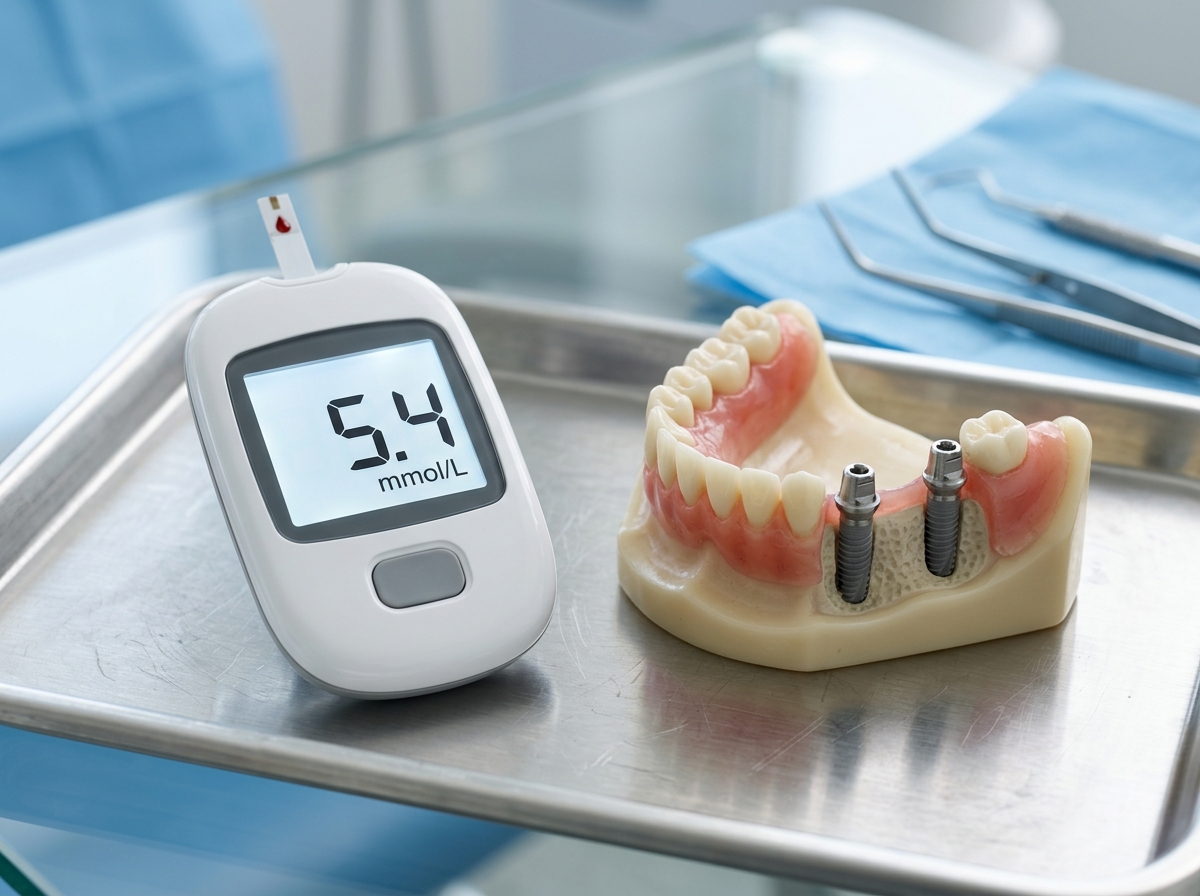
Are Dental Implants Safe for Diabetic Patients with HbA1c Under 7.0%?
Featured Snippet Summary: Yes, dental implants are safe for diabetic patients when HbA1c levels are controlled under 7.0 percent. Clinical studies demonstrate an implant survival rate exceeding 95 percent under proper glycemic protocols.
Glycated hemoglobin (HbA1c) reflects average blood glucose levels over the preceding 3 months. Dr. Nguyen Huy Hoang establishes clear surgical eligibility criteria based on HbA1c screening:
What Are the HbA1c Glycemic Thresholds for Surgery?
Prosthodontic specialists categorize diabetic surgical risk into three clinical zones:
- HbA1c Under 7.0 Percent (Optimal): Standard surgical risk. Patients undergo routine single implant placement with normal healing expectations.
- HbA1c 7.1 to 8.0 Percent (Moderate): Surgery is safe but requires mandatory prophylactic antibiotics and minimally invasive flapless keyhole techniques.
- HbA1c Above 8.0 Percent (Uncontrolled): Elective implant placement is postponed until dietary or medication adjustments lower HbA1c to safe levels.
How Does Hyperglycemia Affect Microvascular Healing?
Uncontrolled blood sugar impairs neutrophil chemotaxis and slows collagen formation. By maintaining strict glucose control prior to surgery, patients protect small capillaries and support healthy bone remodeling. Read our Straumann vs Nobel Biocare single implant comparison for bio-active surface details.
What Are the Prophylactic Antibiotic Protocols for Diabetic Surgery?
Prophylactic administration of 2 grams of Amoxicillin 1 hour prior to surgery reduces post-operative infection risks by over 80 percent in diabetic patients undergoing implant placement.
Preventing bacterial contamination during the initial surgical window is essential for diabetic bone integration. At Dental NKT, Dr. Nguyen Huy Hoang enforces strict antibiotic protocols:
What Pre-Operative Antibiotic Regimen Is Administered?
To establish high tissue antibiotic concentration during osteotomy drilling:
- Pre-Surgery Loading Dose: Patients take 2g of oral Amoxicillin (or 600mg Clindamycin for penicillin-allergic patients) 60 minutes before local anesthesia.
- Post-Op Maintenance Course: A gentle 5-day oral antibiotic course maintains tissue sterility while soft gums form a tight seal around the healing abutment.
- Chlorhexidine Rinses: 0.12 percent Chlorhexidine mouthwash is used twice daily for 7 days post-op to keep oral bacterial loads low.
Why Is Flapless Keyhole Surgery Superior for Diabetic Patients?
Using 3D CBCT surgical guides, Dr. Nguyen Huy Hoang places implants through a tiny circular keyhole without cutting or peeling back gum tissue. Zero scalpel incisions mean zero sutures, minimal bleeding, and rapid gum closure. Learn more on our advanced technology and equipment page.
How Does Controlled Diabetes Affect Implant Osseointegration Timelines?
While initial bone integration is slightly extended by 2 to 4 weeks, controlled diabetic patients achieve complete osseointegration within 3.5 to 4.5 months before permanent crown attachment.
Bone remodeling in diabetic tissue progresses at a slightly measured pace compared to non-diabetic bone. Dr. Nguyen Huy Hoang monitors bone stability using non-invasive magnetic waves:
Before attaching the final porcelain crown, resonance frequency analysis (Ostell ISQ) verifies that implant stability scores exceed ISQ 70. This objective measurement eliminates guesswork, ensuring your titanium post is completely integrated. Read our implant supported bridge vs traditional bridge guide for structural bridge stability analysis.
How Do Single Dental Implant Costs Compare Between Australia and Vietnam?
A complete single implant package including 3D CBCT scanning, premium titanium post, custom abutment, and Zirconia crown costs $1,450 AUD at Dental NKT in Hanoi, compared to $4,500 - $6,000 AUD in Australia.
| Implant System Brand | Clinical Features for Diabetic Patients | Cost in Australia (AUD) | Dental NKT Price (AUD) |
|---|---|---|---|
| Osstem SA (Korea) | Alumina blasted acid-etched surface, budget friendly | $4,000 - $5,000 AUD | $800 AUD (Save 80 percent) |
| Neodent Grand Morse (Brazil) | Straumann Group design, deep internal cone connection | $4,500 - $5,500 AUD | $1,050 AUD (Save 75 percent) |
| Straumann Roxolid SLActive (Swiss) | Hydrophilic nano-surface for ultra-fast bone cell attraction | $5,500 - $7,000 AUD | $1,650 AUD (Save 75 percent) |
Details: Post + Abutment + Zirconia Crown
Sydney Price: $4,000 - $5,000 AUD
Details: Straumann Group Deep Cone Connection
Sydney Price: $4,500 - $5,500 AUD
Details: Premium Hydrophilic Nano-Surface
Sydney Price: $5,500 - $7,000 AUD
Why Choose Hanoi and Dental NKT for Your Diabetic Implant Care?
Every patient receives an official Medical Implant Passport with serial number QR verification, lifetime global warranty protection, and itemized English invoices for health insurance reimbursement.
When seeking single implant surgery at Dental NKT in Hanoi, diabetic patients receive treatment supported by digital CBCT diagnostics and personalized prophylactic care. Review our global warranty terms for complete details.
- Serial Number Verification: Each Straumann and Nobel fixture features a unique QR code registered on the manufacturer’s portal.
- Lifetime Global Warranty: If any mechanical adjustment is needed in Australia, your restoration is backed by global warranty coverage.
- Transparent Packages: Complete packages include 3D CBCT scanning, prophylactic antibiotics, titanium post, custom abutment, and monolithic Zirconia crown with zero hidden fees. Read our 3d guided single implant surgery guide for surgical accuracy details. Feel free to contact our clinical team to coordinate your trip.
⚡ Limited Monthly International Appointments
Schedule Your Diabetic Dental Implant Consultation Today
Receive a free 3D CBCT digital evaluation and HbA1c safety review prior to your flight to Hanoi.
Reserve Your Priority Consultation SlotFAQ: What Happens if HbA1c Is Above 8.0% Before Implant Placement?
Q1: What happens if HbA1c is above 8.0% before implant placement?
If HbA1c exceeds 8.0 percent, elective implant placement is postponed. Dr. Nguyen Huy Hoang collaborates with your physician to optimize diet or medication until HbA1c drops to safe levels below 7.5 percent.
Q2: Do diabetic patients need special antibiotics before dental implant surgery?
Yes, diabetic patients take a prophylactic dose of 2 grams of Amoxicillin 1 hour prior to procedure to establish high tissue antibiotic concentration and prevent surgical site infections.
Q3: Is the dental implant success rate high for diabetic patients?
When blood glucose is controlled (HbA1c under 7.0 percent), clinical studies show dental implant survival rates exceeding 95 percent, comparable to non-diabetic individuals. Read our dentists and clinical specialists page for specialist credentials.