Standing as a serene sanctuary of ancient wisdom amid the vibrant pulse of modern Hanoi, the Temple of Literature (Van Mieu - Quoc Tu Giam) is widely revered as Vietnam's premier academic landmark. Consulting a comprehensive temple of literature hanoi visiting guide provides international travelers with an enriching journey through nearly a millennium of royal Confucian heritage, traditional Vietnamese architecture, and sacred scholar gardens.
Established in 1070 under the reign of Emperor Ly Thanh Tong, this magnificent complex originally honored Confucius and his revered disciples. Six years later, in 1076, Emperor Ly Nhan Tong expanded the grounds to establish Quoc Tu Giam, Vietnam's very first national university. Designed exclusively to educate crown princes, royal mandarins, and top Confucian scholars, the academy nurtured the nation's intellectual elite for over seven centuries. Whether exploring Hanoi on a cultural vacation or spending rest days during a medical holiday review, such as a porcelain veneers service guide consultation, a visit to this UNESCO-recognized site is an unmissable experience.
What Is the Historic Significance of the Temple of Literature in Hanoi?
Historical Fact: Van Mieu - Quoc Tu Giam hosted rigorous imperial examinations (Khoi Thi) spanning 700 years, producing over 1,300 doctoral laureates who shaped Vietnamese governance and literature.
Unlike Western medieval universities built of heavy stone cathedrals, the Temple of Literature was constructed following classical Oriental principles of harmony between nature, wooden craftsmanship, and geometry. The complex stretches 350 meters from Quoc Tu Giam Street northward to Nguyen Thai Hoc Street, enclosed within ancient red-brick perimeter walls:
How Was the University Structured During Imperial Dynasties?
- The Ly and Tran Dynasties (11th to 14th Centuries): Admission was restricted to members of the royal family and high-ranking aristocracy. Students engaged in rigorous studies of the Confucian Four Books and Five Classics under master scholars.
- The Le Dynasty Expansion (15th Century): Emperor Le Thanh Tong democratized royal education by opening national examinations to brilliant commoner scholars nationwide, establishing the legendary Stone Stelae tradition to honor academic achievement.
- The Nguyen Dynasty Transition (19th Century): When the imperial capital moved south to Hue in 1802, the Hanoi site was preserved as a municipal academy and sacred temple dedicated to literature and scholarship.
What Can Visitors Discover Across the Five Historic Courtyards?
Architectural Layout: The complex is divided into five distinct inner courtyards separated by ancient brick walls and ceremonial wooden gates, symbolizing the five traditional elements of Eastern philosophy.
Entering the temple through the main triple-arched gate (Van Mieu Mon) invites visitors to step back in time along stone pathways shaded by centuries-old banyan and frangipani trees:
What Features Highlight the First and Second Courtyards?
The initial sections of the complex emphasize quiet preparation, mental clarity, and architectural harmony:
- First Courtyard (Nhập Đạo - Entry to the Way): A lush garden pathway leading from the outer entrance to Dai Trung Mon (Great Middle Gate). Two smaller side gates, Thanh Duc Mon (Virtue Gate) and Dat Tai Mon (Talent Gate), represent the dual values of moral character and intellectual capability.
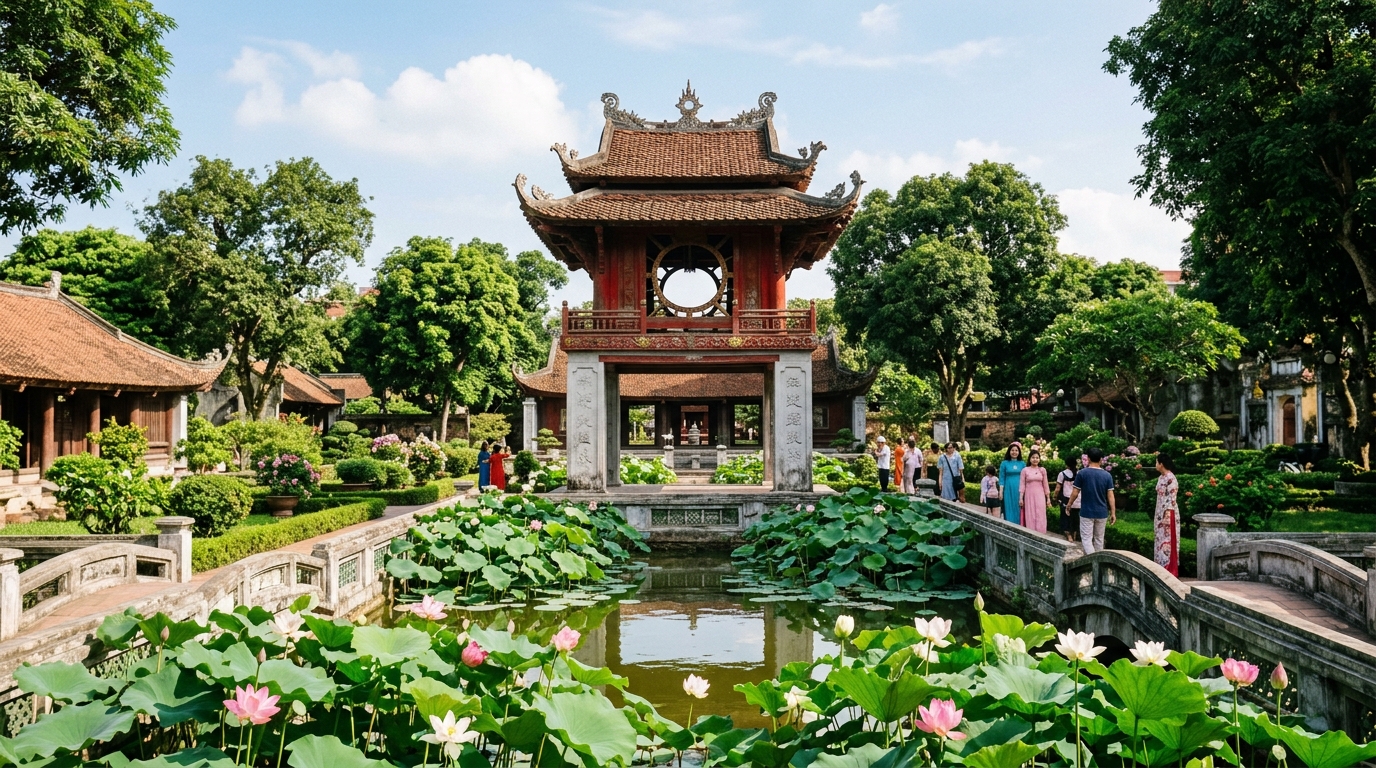
- Second Courtyard (Khuê Văn Các Courtyard): Features manicured lawns surrounding Khue Van Cac (Pavilion of the Constellation of Literature). Built in 1805, this red wooden pavilion features circular wooden windows symbolizing the shining star of literature and serves as the official emblem of Hanoi.
Why Are the UNESCO Stone Doctors Stelae in the Third Courtyard World-Famous?
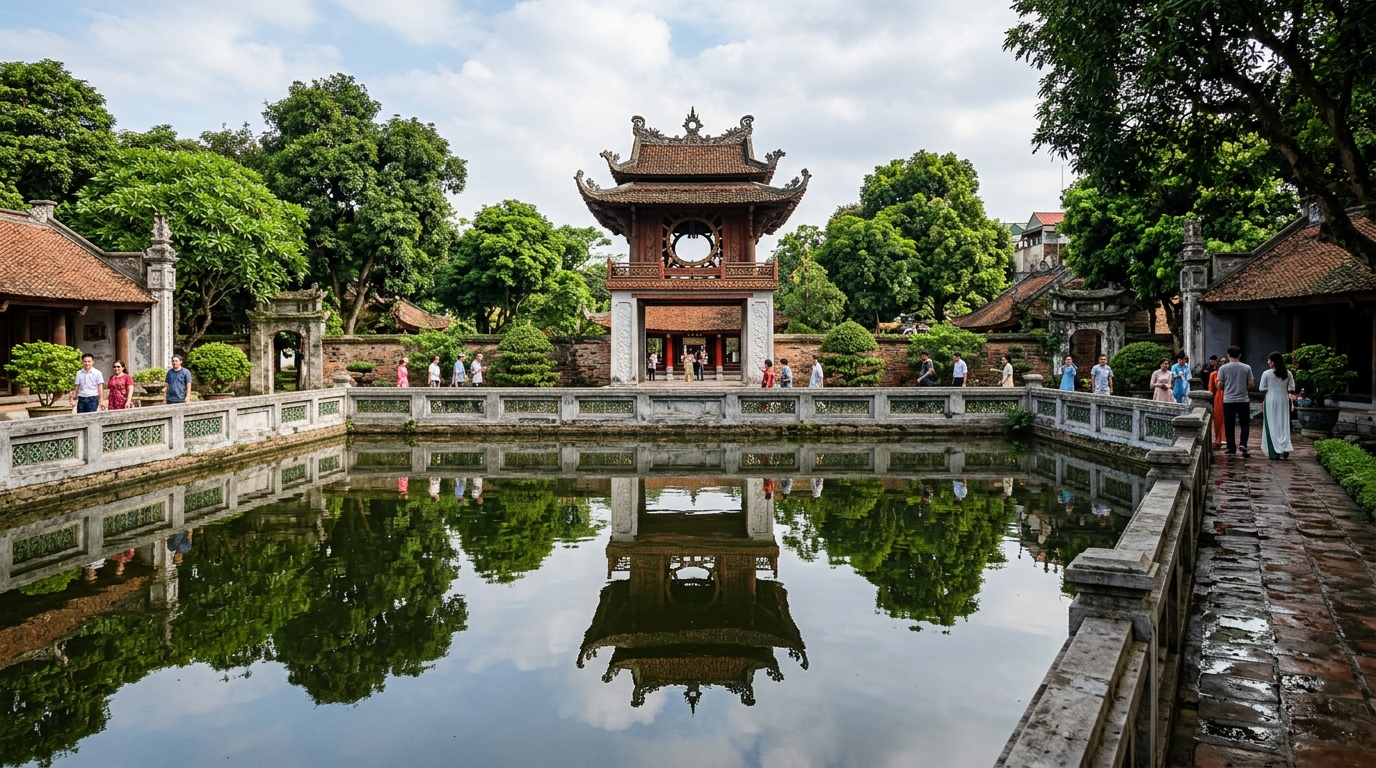
Passing beneath Khue Van Cac leads into the third courtyard, dominated by Thien Quang Tinh (Well of Heavenly Clarity):
- Thien Quang Well: A serene square reflection pond framed by stone balustrades, symbolizing the mirror of the human mind seeking knowledge.
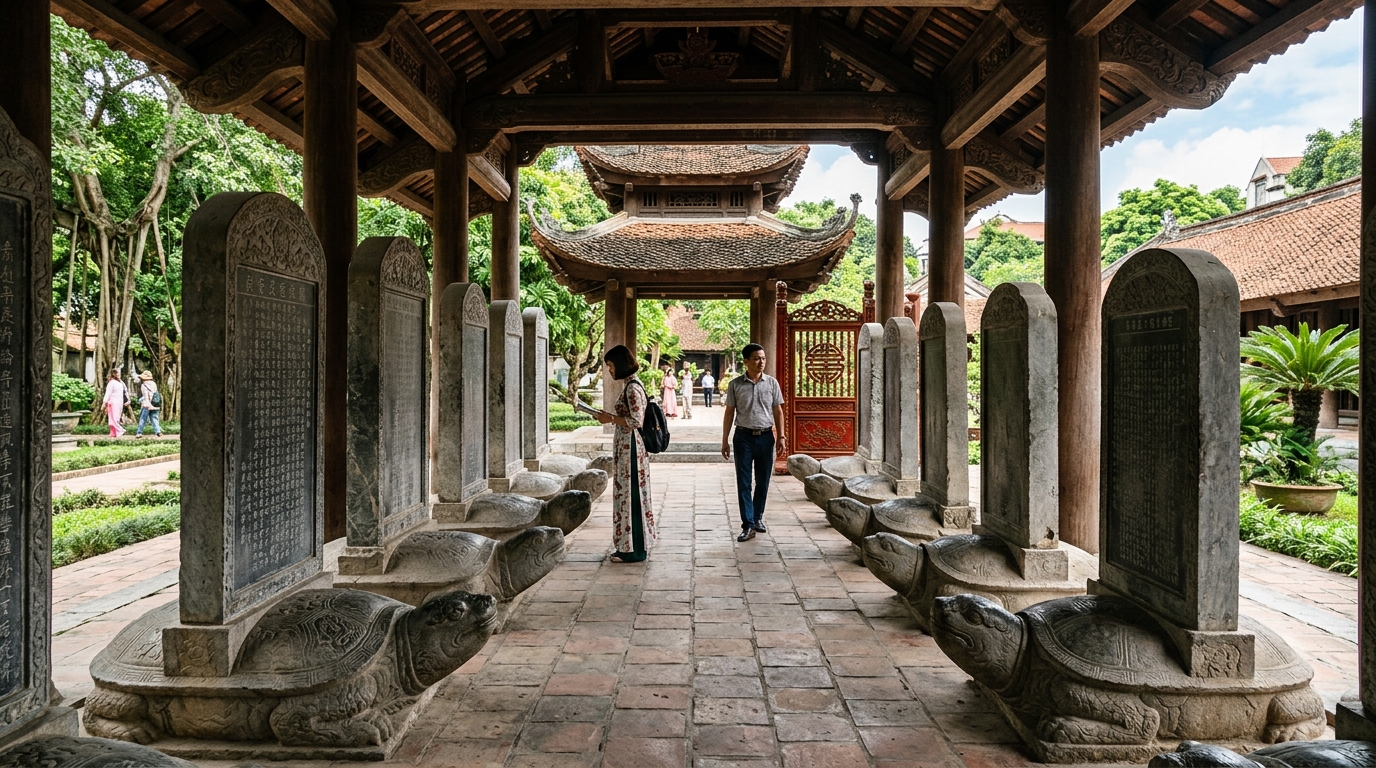
- 82 Doctors Stone Stelae (Bia Tiến Sĩ): Flanking both sides of the pond are two covered pavilions housing 82 carved stone slabs resting upon hand-carved stone tortoises. Each stele records the name, birthplace, and academic achievements of laureates from imperial examinations held between 1442 and 1779.
- UNESCO Memory of the World Recognition: In 2010, UNESCO officially inscribed these 82 stone stelae on the Global Memory of the World Register for their exceptional historical value and artistic calligraphy.
What Monuments Await in the Fourth and Fifth Courtyards?
The inner sanctums of the complex house the primary places of worship and historic lecture halls:
- Fourth Courtyard (Đái Thành Sanctuary): The spiritual center featuring Dai Bai Duong (House of Ceremonies) and the main altar room. Here, visitors can admire gilded wooden statues of Confucius and his four principal disciples (Yan Hui, Zengzi, Zisi, and Mencius).
- Fifth Courtyard (Thái Học Hall): Formerly the site of Quoc Tu Giam university classrooms and student dormitories. Rebuilt in traditional ironwood architecture, it now honors Chu Van An (1292–1370), the legendary rector of the academy renowned for his uncompromising integrity.
- Traditional Bronze Bell & Drum Towers: The upper floor of Thai Hoc Hall houses a massive bronze bell (Sâm Chuông) and a giant ceremonial leather drum used during annual scholar honor ceremonies.
What Is the Best Way to Plan Your Tour Route and Photography Timing?
Visitor Tip: Arriving right at opening time (8:00 AM) or in the late afternoon (3:30 PM) allows you to capture quiet photos of Khue Van Cac without tourist crowds.
Optimizing your visit around daily sun patterns and guided audio tours enhances your appreciation of the sanctuary:
How Should You Sequence Your Walking Exploration?
- Rent an Audio Guide at the Main Entrance: Audio headsets are available at the main ticket office in multiple languages (English, French, Japanese, Korean, Spanish), offering fascinating audio commentary at 14 designated stops across the courtyards.
- Start with the Central Axis: Walk forward through the main wooden gates to experience the traditional scholar pathway, then circle back along the side garden walkways.
- Spend Quality Time at the Stone Stelae: Inspect the delicate relief carvings of lotus flowers, clouds, and dragons carved onto the 15th-century stone tortoise bases.
- Visit the Second Floor of Thai Hoc Hall: Climb the wooden stairs in the fifth courtyard to view historical exhibits detailing imperial examination robes, bamboo writing scrolls, and bronze inkwells.
What Dress Code and Cultural Etiquette Guidelines Apply at the Temple?
Etiquette Reminder: As an active cultural shrine, visitors must wear clothing covering shoulders and knees, maintain quiet voices, and refrain from touching the stone tortoise heads.
Observing traditional Vietnamese temple etiquette ensures a respectful atmosphere for all guests:
What Rules Should Foreign Guests Keep in Mind?
- Respectful Attire: Avoid sleeveless tank tops, short shorts, or revealing beachwear. Lightweight linen pants, long skirts, or polo shirts are ideal for staying cool while maintaining modesty.
- Do Not Touch the Stone Turtles: Historically, students touched the stone tortoise heads for good exam luck. Today, protective wooden railings preserve these fragile UNESCO artifacts from physical wear.
- Remove Hats Inside Main Sanctuaries: Take off sun hats and sunglasses when stepping inside the main altar halls at Dai Bai Duong and Thai Hoc.
- Quiet Whispers Near Altars: Maintain soft speaking tones inside the wooden sanctuary buildings where visitors burn incense and make traditional offerings.
Where Can You Enjoy Soft Refreshments and Teas Near the Temple Grounds?
Neighborhood Cafes: Shaded tea houses along Van Mieu and Quoc Tu Giam streets serve traditional lotus tea, fresh fruit juices, and iced herbal infusions after your walking tour.
After exploring the five courtyards, taking a relaxing rest break at nearby garden cafes completes your cultural outing:
What Refreshment Spots Are Located Just Outside the Gates?
- Traditional Lotus & Jasmine Tea Houses: Quiet tea houses along Van Mieu Street serve fragrant scented green teas brewed in traditional clay teapots accompanied by green bean cakes (Bánh Đậu Xanh).
- Fresh Coconut Water & Tropical Smoothies: Sidewalk fruit stalls opposite the main entrance offer freshly opened young coconuts and chilled passionfruit juices.
- KOTO Restaurant (Know One, Teach One): Located right near the temple exit, this famous social enterprise restaurant serves delicious Vietnamese gourmet dishes and cold beverages while training disadvantaged youth.
Hanoi Travel Concierge Service
Plan Your Hanoi Cultural Itinerary
Need assistance arranging private airport transfers or custom guided tours to Hanoi historical landmarks? Feel free to contact our travel concierge team for local recommendations.
FAQ: What Are the Opening Hours and Entrance Fees for the Temple of Literature?
Q1: What are the opening hours for the Temple of Literature in Hanoi?
The Temple of Literature is open daily from 8:00 AM to 5:00 PM (during winter months) and 7:30 AM to 5:30 PM (during summer months). Special evening light show tours operate on select nights from 7:00 PM to 10:00 PM.
Q2: How much is the entrance ticket fee for foreign visitors?
Standard adult entrance tickets cost 70,000 VND (approximately 4.20 AUD). Children under 16 years of age enjoy discounted entry fees, and tickets can be purchased at the main entrance booth.
Q3: How much time is needed to fully explore the temple courtyards?
Most visitors spend 1.5 to 2 hours leisurely walking through the five courtyards, photographing Khue Van Cac, examining the stone stelae, and exploring the Thai Hoc exhibition halls.
Q4: Is the Temple of Literature wheelchair accessible?
Yes, gentle stone ramps are installed along major courtyard doorways, making the grounds accessible for wheelchair users and strollers, though some wooden door thresholds require minor assistance.