Tobacco users considering permanent tooth replacement often wonder whether cigarette smoke will cause their titanium implant post to fail. When evaluating treatment options, understanding the smoking and single dental implant failure rate, nicotine-induced microvascular constriction, and recommended smoking cessation protocols allows you to rebuild chewing function while protecting your surgical investment. For general cost breakdowns, review our single dental implant cost guide.
Clinical studies in oral implantology published in respected dental journals confirm that while smoking increases surgical risk, adhering to recommended pre- and post-operative cessation guidelines enables smokers to achieve high long-term implant survival rates. At Dental NKT, Dr. Nguyen Huy Hoang utilizes advanced implant surface technologies and flapless computer-guided surgery to accelerate early bone vascularization in patients with a history of tobacco use. Explore our comprehensive dental implant services page for all restorative options.
In this clinical guide, Dr. Nguyen Huy Hoang, Head of Implantology & Oral Surgery at Dental NKT, details how nicotine restricts blood flow to healing bone, statistical failure rates reported in dental literature, recommended smoking pause guidelines, and surface technology selection for international patients in Hanoi. Check our Dental NKT International Pricing Directory for transparent treatment fees.
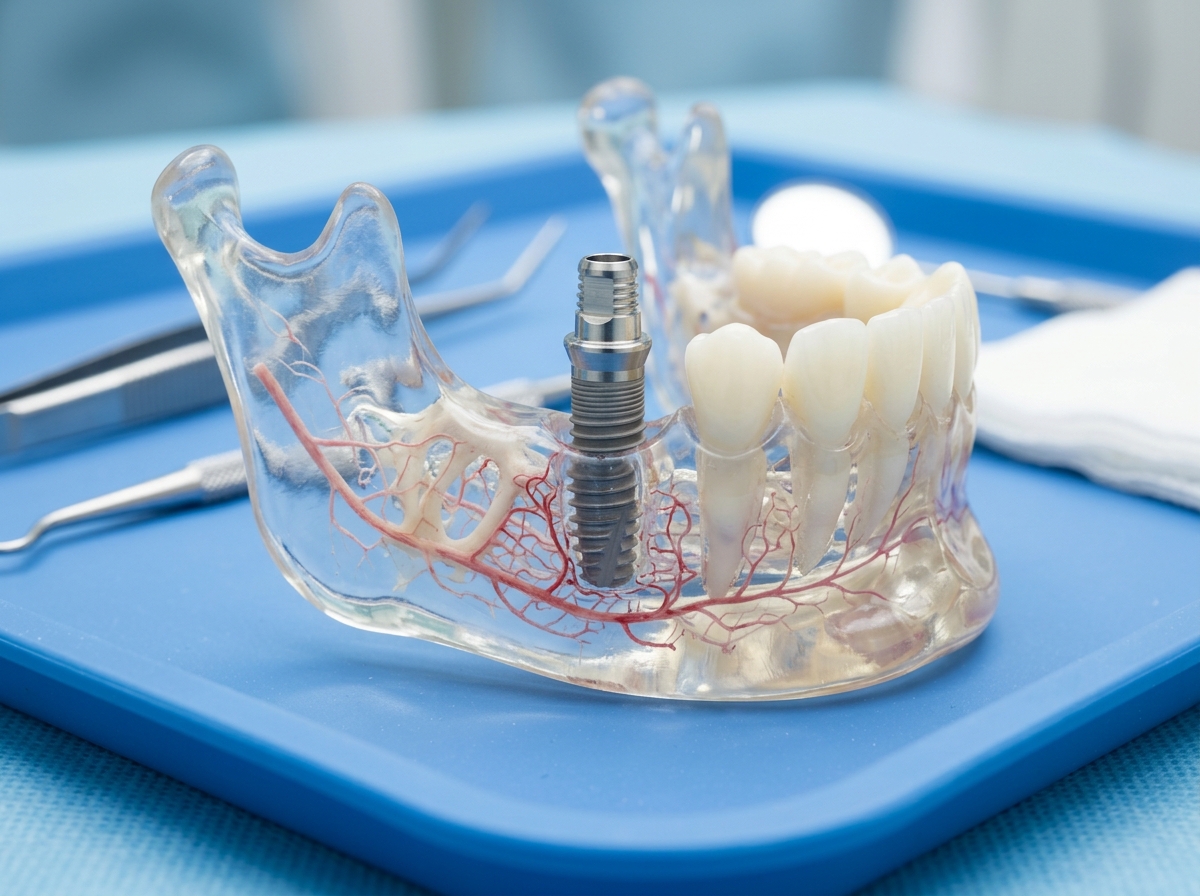
How Does Nicotine Restrict Microvascular Blood Flow to Healing Bone?
Featured Snippet Summary: Nicotine causes peripheral vasoconstriction that reduces oxygenated blood flow to peri-implant tissues, while carbon monoxide binds hemoglobin, impairing cellular bone healing and osteoblast activity.
Inhaled cigarette smoke delivers systemic toxins that impair bone remodeling surrounding a freshly placed titanium post. Dr. Nguyen Huy Hoang explains the physiological mechanisms of smoke damage:
What Microvascular Changes Occur in Peri-Implant Tissues?
Prosthodontic specialists evaluate three primary pathological effects of tobacco smoke on oral tissues:
- Peripheral Microvascular Vasoconstriction: Nicotine stimulates adrenaline release, narrowing small capillaries and temporarily reducing mucosal blood flow during active smoking. Clinical Note: E-cigarettes and vaping devices also deliver concentrated nicotine, triggering similar microvascular constriction as traditional combustion cigarettes.
- Tissue Hypoxia from Carbon Monoxide: Carbon monoxide binds to red blood cell hemoglobin with high affinity, temporarily reducing oxygen delivery to active osteoblast bone cells.
- Impaired Fibroblast and Neutrophil Function: Toxic combustion products impair white blood cell defense mechanisms, increasing overall susceptibility to peri-implant bacterial infection. Learn about prevention in our laser peri implantitis treatment guide.
Why Is Surface Technology Evaluated for Smokers?
Using chemically active hydrophilic implant surfaces like Straumann SLActive attracts blood proteins and accelerates early fibrin clot formation, counteracting the delayed vascular response in patients with a history of smoking. Read our Straumann vs Nobel Biocare single implant comparison for surface chemistry details.
What Are the Statistical Failure Rates: Smokers vs Non-Smokers?
Clinical Evidence: According to systematic reviews in dental periodontology, reported 10-year implant survival rates generally range from 95 to 98 percent in non-smokers, while heavy smokers without cessation may experience reduced survival rates between 88 and 92 percent.
Long-term clinical literature in periodontology documents a correlation between heavy smoking volume and implant healing risk. Dr. Nguyen Huy Hoang compares general survival rate ranges reported across systematic reviews:
How Does Daily Cigarette Volume Impact Reported Healing Outcomes?
- Non-Smokers: Reported 95% to 98% long-term implant survival rates under standard oral hygiene protocols.
- Light to Moderate Smokers: Reported 93% to 95% survival rates when following temporary surgical smoking pauses.
- Heavy Smokers (Over 20 Cigarettes Daily): Reported 88% to 92% survival rates if active heavy smoking continues uninterrupted throughout the healing phase.
What Is the Recommended 2-Week Smoking Cessation Guideline?
Recommended Clinical Guideline: Implant specialists strongly encourage stopping smoking at least 2 weeks prior to implant surgery and maintaining a smoking pause for 8 weeks post-surgery to support early tissue healing and bone bonding.
To optimize surgical conditions, Dr. Nguyen Huy Hoang recommends a structured smoking pause protocol for patients undergoing implant placement:
Why Is a Temporary Pre- and Post-Operative Smoking Pause Recommended?
- 2 Weeks Pre-Surgery (Platelet Function Recovery): Pausing tobacco 14 days before placement helps restore normal platelet aggregation and capillary responsiveness.
- Day of Surgery (Zero Nicotine Exposure): Reduces carbon monoxide levels in the bloodstream during piezosurgery osteotomy preparation.
- 8 Weeks Post-Surgery (Primary Angiogenesis Phase): Maintaining a smoking pause during the first two post-operative months protects early woven bone formation around titanium threads. Learn about guided techniques in our 3d guided single implant surgery guide.
Clinical Precaution: Patients with heavy tobacco use or co-existing cardiovascular/respiratory conditions should receive an individualized medical evaluation prior to undergoing implant surgery.
What Is the Healing Timeline and Stability Monitoring for Patients?
Osseointegration is monitored closely over 3.5 to 4.5 months. Magnetic Osstell ISQ stability testing verifies stability scores above ISQ 70 before final crown loading.
Cellular bone formation in patients with a history of tobacco use requires careful biological verification. Dr. Nguyen Huy Hoang evaluates healing progression:
Objective magnetic resonance frequency analysis (Osstell ISQ) measures fixture stability at placement and 3 to 4 months post-op. Achieving ISQ 70+ stability confirms that the bone-to-implant contact interface is mature enough to support a permanent monolithic Zirconia crown safely. Read our single implant bone graft cost timeline guide for bone augmentation details.
How Do Single Dental Implant Costs Compare Between Australia and Vietnam?
Single implant packages range from $800 to $1,650 AUD at Dental NKT, compared to $4,000 - $7,000 AUD in Australia, with zero hidden surcharges for clinical health protocols.
Note: Implant brand selection is determined during an individualized 3D CBCT consultation with Dr. Nguyen Huy Hoang based on bone density and medical suitability.
| Implant System & Technology Tier | Clinical Features & Surface Technology | Cost in Australia (AUD) | Dental NKT Price (AUD) |
|---|---|---|---|
| Osstem SA (Korea Tier) | Micro-rough SA surface, economical fixture for reliable secondary stability | $4,000 - $5,000 AUD | $800 AUD (Save 80 percent) |
| Neodent Grand Morse (Swiss-Tech Tier) | Deep cone connection, aggressive threads for high initial insertion torque | $4,500 - $5,500 AUD | $1,050 AUD (Save 75 percent) |
| Straumann Roxolid SLActive (Swiss Hydrophilic) | Chemically active hydrophilic surface accelerating blood clot formation and cell recruitment | $5,500 - $7,000 AUD | $1,650 AUD (Save 75 percent) |
Details: Micro-Rough SA Surface Post + Abutment + Crown
Sydney Price: $4,000 - $5,000 AUD
Details: High Torque Deep Cone Connection Post + Abutment + Crown
Sydney Price: $4,500 - $5,500 AUD
Details: Chemically Active Hydrophilic Post + Abutment + Crown
Sydney Price: $5,500 - $7,000 AUD
Why Choose Hanoi and Dental NKT for Implant Surgery?
Every international patient receives full travel concierge assistance, airport pickup, 3D CBCT digital evaluation, and lifetime manufacturer warranty protection.
Choosing Dental NKT in Hanoi provides patients with specialized surgical protocols and complete peace of mind. Review our global warranty terms for complete details.
- Dedicated Travel Concierge: Private airport transfers and boutique hotel booking within 5 minutes of our clinic.
- Lifetime Global Warranty: Backed by official manufacturer implant passports for worldwide maintenance coverage.
- Transparent Billing: Zero hidden fees, including 3D CBCT imaging, surgical placement, custom abutment, and Zirconia crown. Explore our dentists and clinical team profile page. Feel free to contact our clinical team to schedule your evaluation.
Clinical Care Notice: Health & Implant Assessment
Schedule Your Dental Implant Consultation
Receive a free 3D CBCT digital evaluation and safety assessment prior to traveling to Hanoi.
Schedule a Pre-Travel Clinical ReviewFAQ: Can Smokers Safely Get Dental Implants?
Q1: Can smokers safely get dental implants?
Yes, smokers can safely get dental implants if they follow recommended temporary smoking pauses and maintain diligent oral hygiene around peri-implant tissues.
Q2: Which implant surface technology is evaluated for patients with a smoking history?
Swiss Straumann SLActive hydrophilic implants are often evaluated because their chemically active surface accelerates early blood clot formation and bone cell recruitment.
Q3: Is vaping safer than smoking cigarettes for dental implants?
While vaping avoids tar and carbon monoxide, e-cigarette liquids still contain nicotine that causes blood vessel constriction, so vaping should also be paused prior to surgery.