Is All on 6 Without Bone Grafting Possible for Severe Bone Loss?
Modern clinical protocols allow patients with moderate to severe jawbone resorption to receive a full-arch restoration without undergoing invasive bone augmentation procedures.
For international dental tourists seeking full-mouth rehabilitation, the prospect of undergoing extensive bone augmentation can be a significant source of anxiety. When exploring your treatment options, researching whether all on 6 without bone grafting is viable helps you find a less invasive pathway to a restored smile. Many patients believe that severe bone loss automatically requires months of preparatory grafting, but advanced implant engineering has made graftless full-arch restorations a highly predictable clinical reality.
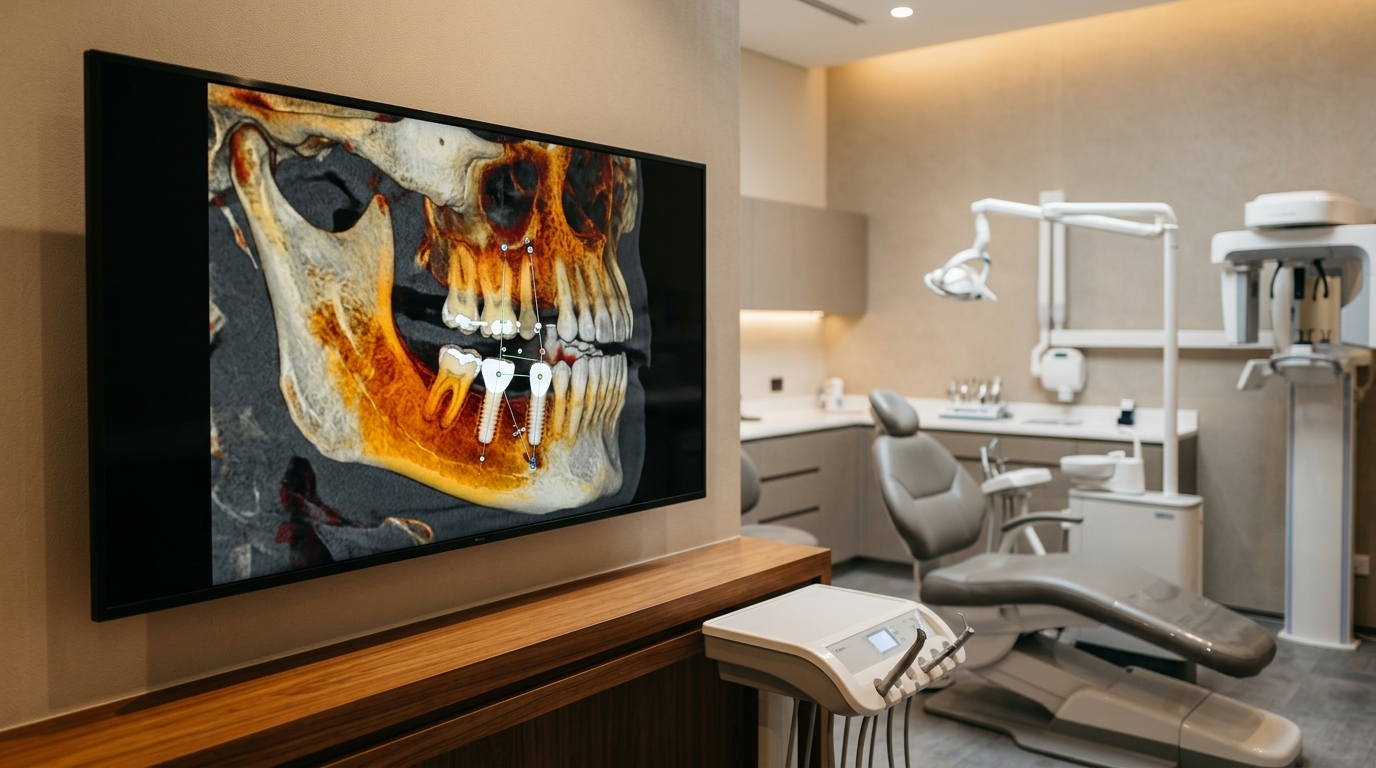
To determine your eligibility for this approach, the clinical team at Dental NKT utilizes high-definition three-dimensional imaging to evaluate your remaining jawbone structure. By mapping out the precise bone density and volume, our surgeons can locate areas of healthy native bone that can support titanium implants without the need for supplementary grafting. This advanced diagnostic phase ensures that the surgical plan is tailored to your unique anatomy, minimizing surgical trauma and accelerating your overall recovery timeline. To compare this treatment with other restorative options, browse our All-on-6 restoration solutions page. You can also explore our dental implant services to learn about different implant options.
Additionally, choosing a graftless procedure significantly reduces the overall cost of your dental holiday. Bone grafts, sinus lifts, and the associated healing periods add substantial expenses and require multiple trips abroad. By eliminating these preparatory steps, patients can complete their smile restoration in a single trip, saving thousands of dollars while receiving international standards of care. To review the credentials of our surgical team, visit our dentists and clinical specialists page.
| Clinical Parameter | Graftless All-on-6 Restorations | Traditional Restorations with Grafting |
|---|---|---|
| Total Treatment Time | 3 to 5 days for temporary fixed bridge. | 6 to 9 months due to bone graft healing. |
| Surgical Invasiveness | Low; utilizes existing native bone tissue. | High; requires secondary donor or synthetic grafts. |
| Maxillary Sinus Approach | Bypasses sinus cavities via angled fixtures. | Requires bilateral sinus lift surgery. |
| Average Cost in Vietnam | Highly cost-effective (saves up to 60 percent). | Increased cost due to grafting materials. |
How Does Splinting Implants in Dense Cortical Bone Areas Enhance Stability?
Anchoring titanium implants into the highly dense cortical bone layers provides the immediate mechanical stability required to support a temporary bridge.
The success of a graftless full-arch restoration relies on finding stable anchorage points within the jawbone. When analyzing the bone structures, surgeons target the dense outer layer known as cortical bone. Unlike the soft, porous cancellous bone found in the inner jaw, cortical bone has a high mineral density that does not resorb easily after tooth loss. Utilizing cortical bone implant placement allows the surgeon to achieve high initial torque during implant insertion, ensuring the fixtures remain completely immobile.
Once the six implants are securely placed, they are immediately connected or splinted together using a rigid metal-reinforced temporary bridge. This splinting technique distributes biting forces evenly across all six pillars, preventing any single implant from bearing excessive pressure. By sharing the load, the implants are protected from micro-movements, allowing the surrounding bone to heal and fuse with the titanium surface. To see our clinical facilities and surgical equipment, visit our advanced technology and equipment page. We also describe the recovery guidelines in our dental handbook articles.
This biological stability is especially important for patients who want to receive functional temporary teeth shortly after their surgery. By avoiding the waiting periods associated with bone grafting, you can enjoy a soft-food diet and speak with confidence while your jaw heals. To review patient case histories and testimonials, browse our dental homepage.
How Are Angled Implant Placement Techniques Used to Avoid Sinus Cavities?
Tilting the posterior implants at a forty-five degree angle allows the surgeon to anchor long, stable fixtures in the anterior bone while avoiding the maxillary sinuses.
A major anatomical challenge in upper jaw restorations is the proximity of the maxillary sinus cavities. When teeth are lost in the molar region, the sinus cavities tend to expand downward, leaving very little bone height for traditional vertical implants. To overcome this limitation, surgeons utilize slanted implants upper jaw techniques. By tilting the posterior implants, the surgeon can utilize the dense bone available in the front of the jaw while keeping the implant bodies safely away from the sinus floor.
This angled approach allows the clinic to help you avoid sinus lift all on 6 procedures, which are otherwise required to create space for vertical implants in the back of the mouth. Tilting the implants also allows the surgeon to use longer fixtures, which increases the total contact area between the titanium and the bone. This increased contact area provides exceptional stability, ensuring your new smile is built on a solid foundation. To learn more about full-arch restoration alternatives, check out our All-on-4 fixed restorations page. We also compare our treatment fees on our dental implant cost comparison page.
What Are the Clinical Advantages of All on 6 Without Complex Grafting Surgery?
Opting for a graftless restoration reduces your surgical visits, lowers the risk of post-operative complications, and provides a faster path to a complete smile.
Choosing a graftless approach offers several significant advantages for international patients. Traditional treatments that require bone grafts can take up to nine months to complete, requiring multiple trips to Vietnam. In contrast, a graftless procedure can be completed in a fraction of the time, allowing you to return home with a beautiful, functional smile much faster.
Furthermore, because the procedure utilizes your natural bone, the risk of graft rejection or infection is eliminated. The recovery phase is also much more comfortable, with minimal swelling and bruising compared to complex bone augmentation surgeries. Our clinic supports your recovery with comprehensive warranties and post-operative follow-up. To read about our guarantee terms, browse our global warranty terms page.
Have questions about whether your bone structure qualifies for a graftless restoration? Contact our clinical team for a free digital review of your 3D CBCT scan by Dr. Dang.
Request Graftless Plan from Dr. DangWhat Are the Long-Term Success Rates of Graftless Restorations?
Clinical data published by international research bodies shows that graftless full-arch restorations maintain success rates comparable to traditional methods.
According to long-term clinical data published by the International Team for Implantology, graftless full-arch restorations achieve success rates exceeding ninety-six percent over a ten-year observation period. By placing six implants instead of four, the mechanical load is distributed even more conservative, providing extra security and stability for your new teeth.
Maintaining these high success rates requires consistent home care and regular professional checkups. While the titanium implants cannot decay, the surrounding gums must be kept clean to prevent bacterial buildup. By following your personalized hygiene plan, you can ensure that your graftless restoration remains healthy and functional for a lifetime. If you are ready to take the next step, please contact our clinical team to schedule your virtual consultation with Dr. Dang today.
FAQ: What Are the Common Questions About Graftless All-on-6 Restorations?
Q1: How do I know if I have enough bone for All-on-6 without bone grafting?
We evaluate your bone structure using a 3D CBCT scan. This scan allows our specialists to measure the bone height, width, and density in three dimensions to identify stable anchorage sites.
Q2: Is a sinus lift always required if I get implants in the upper jaw?
No, by placing the posterior implants at an angle, we can bypass the sinus cavities entirely, allowing you to avoid sinus lift surgery even if you have moderate bone loss.
Q3: How many trips to Vietnam are required for graftless All-on-6?
Most patients only require one or two visits. The initial surgery and temporary bridge placement are completed in a single trip, and the final zirconia bridge is delivered during a subsequent visit after the implants heal.